

肠易激综合征(专业版)
肠易激综合征(IBS)是一种十分常见的慢性结肠功能障碍,其典型症状包括大肠痉挛、慢性腹痛、腹胀、腹泻和便秘等。IBS一般不会引起肠道组织的改变或增加患结直肠癌的风险。
其他名称:肠易激征;功能性肠炎;肠神经症;结肠痉挛;结肠过敏
英文名称:Irritable Bowel Syndrome,Functional Colitis,Intestinal Neurosis,Spastic Colon
大便变化一般包括便秘(以便秘为主的IBS,简称IBS-C型),或腹泻(以腹泻为主的IBS,简称IBS-D型。
下列因素会增加患肠易激综合征的机会:
此外,IBS与以下相关联:
选项可包括如下:
调整饮食与生活方式
调整饮食可以帮助控制症状:
营养与草本综合干预
以下是基于循证医学和循证营养学有关文献综合的结果。
有助于防控肠易激征的营养和草本补充剂,主要包括如下:
1.益生菌:
益生菌是一种微生物,当以足够的水平给药时,可以为宿主提供健康益处1。益生菌作为一个整体,当持续服用时,可以帮助重新平衡肠道菌群,缓解IBS症状,并在2018年美国胃肠病学会(ACG)指南中被推荐用于治疗整体IBS症状以及治疗腹胀和胀气2。然而,2021年ACG指南得出结论,尽管益生菌是IBS治疗的重要研究领域,目前还没有足够的证据推荐它们用于全球性IBS症状3。某些益生菌菌株和益生菌混合物已在IBS患者中进行了临床研究,并显示出积极的效果。
与健康个体相比,便秘型IBS(IBS-C)4和腹泻型IBS(IBS-D)5患者的胃肠道(GI)中发现了一种特别重要的细菌,即双歧杆菌6。长双歧杆菌BB536已在临床上进行了充分的研究,并在各种环境中得到了证明,包括抗生素的使用,以改善腹泻和便秘的排便模式。它还被证明有助于消除机会性胃肠道病原体,并对免疫功能产生有益作用7。另一种被证明可以改善肠道症状的特异性双歧杆菌菌株是乳双歧杆菌HN019,尤其是在便秘患者中。一项随机对照试验发现,乳双歧杆菌HN019以每天100亿CFU的剂量治疗28天,增加了一组功能性便秘患者的排便频率,减少了紧张,这些患者在基线下每周排便三次或更少8。在另一项针对有功能性胃肠道症状的个体的临床试验中,与安慰剂相比,乳双歧杆菌HN019每天服用14天也显示出减少转运时间和缓解症状,更高的日剂量172亿CFU被证明比18亿CFU更有效9。评估乳双歧杆菌HN019与不同乳酸杆菌菌株联合使用的其他研究表明,在短短两周内对与便秘相关的胃肠道症状有积极影响10,11。
双歧杆菌属下的菌株婴儿双歧杆菌35624™也被多项临床研究证实其可改善腹胀、腹痛等胃肠不适或消化不良症,以及缓解IBS相关的便秘或腹泻症状12,13,降低肠道炎症水平14,15。
在乳酸杆菌中研究最多并被证实可缓解IBS症状的是植物乳杆菌LP299v,IBS患者在四周内每天服用200亿CFU,肠胃胀气迅速缓解;在停止补充后很长一段时间内,胃肠道整体功能仍有改善16。
凝结芽孢杆菌的孢子形成细菌对包括高温和胃酸在内的恶劣环境极为耐受17,在多项临床研究中也被证明可以改善IBS症状18-20。具体而言,凝结芽孢杆菌MTCC 5856,每天补充20亿CFU、持续90天,被证明可以显著改善腹胀、呕吐、腹泻,与安慰剂相比,IBS-D患者的腹痛和排便频率也有所改善,也改善了疾病的严重程度和生活质量20。一项类似设计的研究对IBS和抑郁症患者补充凝结芽孢杆菌MTCC 5856、连续 90天进行了测试,发现与安慰剂相比抑郁症和IBS症状有所改善21。
布拉氏酵母菌是一种经过充分研究的益生菌酵母,在几项研究中显示,它可以改善与抗生素使用、旅行者腹泻和复发性艰难梭菌感染有关的腹泻22,23。尽管布拉氏酵母作为单一疗法,改善特异性IBS症状的临床数据并不特别有力,多项研究表明,用这种益生菌酵母治疗对改善IBS相关的生活质量是有效的24,25。此外,在IBS-D患者中,与安慰剂相比,布拉氏酵母已被证明可降低血液和上直肠中的促炎细胞因子白细胞介素(IL)-8和肿瘤坏死因子α(TNF-α),并增加抗炎细胞因子IL-10的水平。在IBD等其他情况下的研究表明,布拉氏酵母菌可能通过改善肠道屏障完整性在解决胃肠道疾病中发挥作用,这也是与IBS有关的一个因素。它还被证明可以通过增加免疫球蛋白A的肠道分泌来帮助解决感染性腹泻,这有助于防止感染26。
2.维生素D:
一些证据表明,维生素D补充剂可能对一些IBS患者有益,尤其是维生素D缺乏症患者。在一项对88名符合罗马IV IBS-D标准且维生素D缺乏或不足的人进行随机分组的研究中,受试者每周接受1250mcg(50,000IU)维生素D3或安慰剂治疗,为期9周。所有参与者还接受了135mg的抗痉挛药物美贝韦林(Colofac),每天两次。在74名完成研究的受试者中,与安慰剂组和基线相比,维生素D组的IBS症状严重程度和炎症介质IL-6水平显著降低27。另一项随机对照试验发现,与安慰剂相比,每两周1250mcg(50,000 IU)的维生素D3改善了一些与炎症和氧化应激相关的生物标志物。对某些炎症生物标志物(TNF-α和IL-17)的影响仅在IBS-D受试者中明显,但无论IBS亚型如何,其他炎症标志物和与氧化应激相关的炎症标志物的变化都是明显的28。在一项为期六个月的随机对照试验中,90名IBS受试者每两周服用1250mcg(50,000 IU)维生素D或安慰剂。维生素D组的报告称,与服用安慰剂的受试对象相比,症状有所改善29。
一项纳入112名患有IBS和维生素D水平低的青少年的试验发现,与安慰剂相比,每天补充50mcg(2000IU)维生素D六个月可改善症状30。另一方面,一项试验中,135名患有IBS和维生素D水平低的参与者在12周内每天服用75mcg(3000IU)维生素D或安慰剂,结果发现,尽管血清维生素D水平显著升高,但在研究结束时症状严重程度没有差异31。
尽管并非所有研究都发现维生素D有益处,但考虑到维生素D的最低成本和良好的安全记录,补充维生素D对IBS患者来说是合理的。补充维生素D可能对维生素D水平低的患者特别有用32。
3.褪黑素:
褪黑激素是一种多功能激素,在胃肠道疾病中表现出多种有益作用,而不依赖于其对睡眠的更广为人知的作用33。动物研究表明,肠道内分泌细胞在胃肠道中产生的褪黑激素远远超过松果体产生的褪黑激素34,35。肠道中的褪黑素受体已被证明在运动、炎症和疼痛中发挥作用33。在一项动物研究中,褪黑素也被证明可以影响肠道微生物群的组成,减少压力和睡眠不足引起的微生态失调36。
在一项针对IBS和睡眠障碍患者的研究中,睡前服用3mg褪黑素两周可显著降低腹痛和直肠敏感性37。另一项双盲、安慰剂对照、交叉研究支持了这些发现,补充3mg褪黑素可减轻IBS症状38。在绝经后妇女中,每天补充褪黑素,剂量为早上3mg,晚上5mg,持续六个月,在4个月和6个月时,与安慰剂相比,便秘为主的患者(IBS-C)的总体症状得到显著改善39。在一项小型研究中,除了改善肠功能外,还检查了更广泛的症状,褪黑激素与整体生活质量改善43%相关,而安慰剂组为14%。服用褪黑素的患者的总体IBS评分提高了45%,而服用安慰剂的患者为16%40。
4.谷氨酰胺:
谷氨酰胺是体内最丰富的氨基酸,也是肠道上皮细胞的重要燃料。谷氨酰胺由于内源性合成而被认为是一种非必需氨基酸;然而,在高代谢状态下(如严重烧伤、感染和手术;可能还有怀孕、哺乳和大量生长期),它通常被认为是“有条件的必需”41,42。在这种身体高压力时期,小肠粘膜消耗谷氨酰胺的速率超过了生产速率43。因此,谷氨酰胺已被证明可以改善肠道通透性44,45。
谷氨酰胺已被证明在肠道修复很重要的环境中具有临床益处,如克罗恩病和感染后腹泻46,47。在肠道感染后患有IBS-D的个体中,一项随机对照试验发现,谷氨酰胺剂量为5g,每天三次,持续八周,几乎80%的人的IBS严重程度评分得到了显著改善,而安慰剂组只有5.8%的人达到了类似的改善。谷氨酰胺组的患者在日常排便频率、布里斯托尔大便量表评分和肠道通透性方面也有非常显著的改善。谷氨酰胺组的肠道通透性正常,但对照组没有46。
运动,特别是在高强度或高温下,已被证明可以增加肠道通透性47。事实上,25-50%的精英运动员有胃肠道症状48。极端温度和水合作用不足会进一步导致胃肠道功能失调47。对运动员的临床研究表明,谷氨酰胺有助于减少甚至防止与剧烈运动相关的肠道通透性增加50,51。
5.镁:
镁是一种渗透性泻药,用于治疗便秘已有很长的历史52。在患有轻度至中度慢性便秘的女性中,每天三次服用500mg氧化镁,持续28天,显著改善了自发排便(SBM)的频率、结肠转运时间,与安慰剂相比,Bristol大便稠度评分总体症状和便秘相关的生活质量也显著改善53。在患有慢性便秘的成年人中,与安慰剂(近12%)相比,每天1500mg氧化镁或1000mg番泻叶(一种刺激性泻药)治疗28天,总体症状显著改善(分别为68%和69%)54。与安慰剂相比,积极治疗组的SBM和完全SBM也有显著改善。
因为高剂量的镁可能会引起轻微的腹部不适,所以最好在白天逐渐增加和/或分开剂量。在健康人中,肾脏每天过滤2000–2400mg镁55,并且在通常用于泻药的剂量下使用镁的风险很小。然而,过量使用镁,特别是那些患有晚期慢性肾脏疾病的人,会导致高镁血症56。那些服用额外泻药并每天使用超过1000mg镁的人患这种并发症的风险更大。
6.肌肽锌:
肌肽锌是锌的一种形式,多项研究表明它有助于肠道内壁的健康,提高紧密连接的完整性并保护肠道绒毛免受损伤57,58。肠通透性增加已被证明是IBS-D患者的一个问题,并与内脏超敏有关59,60。锌肌肽也具有一些抗炎和抗氧化作用,这可能有助于其在IBS中的作用61。
在一项针对健康志愿者的交叉研究中,每天两次37.5mg的锌肌肽被证明可以改善非甾体抗炎药使用引起的肠道通透性增加58。在一项随机、对照、交叉试验中,在相同剂量下,锌肌肽显着降低了剧烈运动引起的肠道渗透率增加。研究结束时效果最大,治疗14天后渗透率下降71%62。
7.胶原蛋白:
胶原蛋白通常被认为具有肠道愈合作用:市场上的许多“肠道愈合”饮食和胶原蛋白增强产品都暗示了这种作用。但是,截至2021年年中,还缺乏针对胶原蛋白的人体研究。然而,细胞和动物研究的临床前研究表明,胶原蛋白肽可能支持肠道完整性,并减少与肠道通透性增加有关的炎症。
具体而言,在遭受烧伤的小鼠中,在损伤后7天,已知这种设置会增加肠道通透性,在降低血清内毒素水平(肠道通透性的标志物)和炎症标志物TNF-α和IL-6方面,胶原蛋白肽治疗的效果比谷氨酰胺更大63。对同一动物模型的其他研究发现,当损伤后早期补充胶原蛋白肽时,烧伤诱导的肠道通透性降低,紧密连接破坏64。研究结果Caco-2细胞单层(研究肠道通透性的常见模型)的细胞研究也表明,胶原蛋白肽可以降低炎症触发因子TNF-α诱导的肠道通透性65,66。
8.消化酶:
根据2012年的一项全面调查,IBS患者使用消化酶补充剂的情况很普遍67。综合酶补充剂通常包括用于分解乳糖的乳糖酶、用于分解植物物质的酶如木聚糖酶、纤维素酶和半纤维素酶、促进醇溶蛋白分解的特异酶、支持蛋白质消化的蛋白酶,脂肪酶可以改善脂肪的消化,α-半乳糖苷酶可以帮助分解豆类等食物中的低聚糖。补充特定的消化酶(如乳糖酶)是治疗乳糖不耐受相关消化症状的公认干预措施。
补充酶摄入也被用作外分泌性胰腺功能不全(EPI)相关症状的干预措施,外分泌性胰功能不全可能具有类似于IBS的症状,特别是在其轻度状态下68。由于EPI通常在胰脂肪酶降至正常胰腺输出的10%以下时被诊断,在达到诊断阈值之前,许多人可能会出现与胰腺输出不足有关的症状69。一些疾病与EPI有关—在约40%的长期糖尿病患者中发现胰腺弹性蛋白酶产生减少(<200mcg/g),而乳糜泻和饮酒是其他潜在的影响因素70-72。综合性的粪便检测,包括对消化健康指标(如弹性蛋白酶水平)的评估和对未消化脂肪的评估,可以帮助确定轻度EPI是否是导致IBS用餐症状的因素。
由于可能存在轻度EPI、未确诊的食物不耐受或敏感,或对高FODMAP食物的敏感性,使用消化酶作为膳食补充剂可能改善与用餐相关的IBS症状73,74。
9.朝鲜蓟:
朝鲜蓟叶自古罗马时代起就被用作支持消化功能的传统药物。研究表明,它可以促进胆汁的产生,帮助消化膳食脂肪,减少痉挛和胀气。一项随机对照试验显示,与安慰剂相比,朝鲜蓟提取物在给药后120-150分钟可显著增加胆汁分泌量75。动物研究也支持这种植物的传统用途76,77。
在一项研究中,每天三次服用两粒320mg朝鲜蓟叶提取物胶囊,几乎完全消除了腹痛、痉挛、腹胀、胀气78。进一步的分析表明,朝鲜蓟叶提取物显著改善了功能性消化不良(即无明显原因的复发性消化不良)受试者的生活质量79。另一项研究发现,在两个月内每天摄入320或640mg朝鲜蓟叶萃取物显著减轻IBS症状,提高生活质量80。
10.姜根:生姜通常用于缓解恶心和呕吐81,还可以通过刺激迁移运动复合体的活动来改善便秘,迁移运动复合体是促进肠道运动(蠕动)和排便的神经和平滑肌复合体。迁移运动复合物活性的缺乏可能导致SIBO(小肠菌过度生长)的失调状态,这是一些人IBS的一个因素82。研究表明,用200mg生姜治疗可以增加迁移运动复合物的活性,以应对试验餐83。生姜的活性成分生姜酚(Gingerols)和姜烯酚(Shogaol)也具有抗炎特性84。
朝鲜蓟和生姜组合:两项临床研究着眼于朝鲜蓟和生姜标准提取物的特定组合对消化健康的影响。在一项多中心、随机、双盲、安慰剂对照试验中,功能性消化不良患者每天在午餐和晚餐前服用两次该组合(含有100mg朝鲜蓟和20mg生姜提取物)85。治疗14天后,接受该配方的试验组症状显著改善,而安慰剂组没有变化。研究结束时(第28天),添加朝鲜蓟/生姜的组恶心、腹胀、上腹部饱胀和疼痛有显著改善。在一项旨在观察急性补充朝鲜蓟/生姜组合对胃容量影响的试点、随机、交叉研究中,受试者餐后胃面积小24%,餐前服用一粒胶囊,随后对一小群参与者进行了评估,发现在餐前摄入两粒补充剂后,与安慰剂相比,餐后胃面积减少了38%86。
11.薄荷油:
薄荷油是一种天然的解痉药。美国胃肠病学会(ACG)指南2018推荐薄荷油用于治疗IBS的总体症状,在他们对七项随机临床试验的分析中显示,它比安慰剂显著更有效,需要治疗的数量(NNT)为487。NNT是为了实现研究结果的一次出现而需要接受干预的人数(在本例中是IBS症状的改善)。在一项研究中,每天两次服用225mg薄荷油的肠道包衣制剂,四分之三的患者的所有IBS症状都减轻了50%以上,而安慰剂组只有38%的患者症状得到了改善88。
在一项精心设计的研究中,187mg类似的薄荷油产品在八周内每天饭前三次服用,与安慰剂相比,在腹部不适、腹痛和生活质量方面有显著改善,但在腹泻、便秘或腹胀方面没有改善89。在另一项研究中,薄荷油治疗IBS患者的益处包括减轻腹痛,减少腹胀和胀气,减少胃咆哮,减少大便频率,改善大便一致性90。一项对12项随机试验(包括835名受试者)的荟萃分析得出结论,与安慰剂相比,薄荷油改善了整体IBS症状和腹痛,报告的不良反应没有差异91。
薄荷油和香菜籽油(Caraway seeds)也被一起研究过。在一项针对45名非溃疡性消化不良患者(其中约一半患有肠易激综合征)的双盲安慰剂对照临床研究中,治疗组的受试者服用了一种肠溶胶囊,其中含有薄荷和香菜籽油的组合,每天三次,持续四周。虽然所有患者在治疗前都抱怨中度至重度疼痛,但治疗组42%的患者在接受联合治疗两周后没有疼痛,而安慰剂组只有一名患者。治疗四周后,治疗组63%的患者没有疼痛,安慰剂组为25%,治疗组89%的患者疼痛强度有所改善,安慰剂组则为45%92。同样的研究人员后来进行的一项试验也发现了类似的结果,在29天的治疗后,67%的功能性消化不良患者的薄荷/香菜油混合物得到了很大或非常大的改善,而服用安慰剂的患者只有21%93。薄荷油的一个可能的副作用是胃灼热,因为它可能对食道肌肉有松弛作用87。
12.黄连素:
黄连素是一种黄橙色生物碱,存在于白毛茛、伏牛等植物中,通过多种机制可能对IBS有用。黄连素具有充分证明的抗菌作用,并支持肠上皮紧密连接的完整性94-97。在动物中,它也被证明具有抗伤害感受作用,降低内脏过敏反应98。
在人类研究中,黄连素已被证明对治疗各种病因的腹泻有效。在IBS-D患者中,与安慰剂相比,每天两次400mg盐酸黄连素治疗八周,显著降低了腹泻、腹痛和排便迫切需要的频率。与安慰剂相比,IBS症状、生活质量以及抑郁和焦虑的评分也有所改善99。一项对包括黄连素、瓜尔胶和褪黑素在内的组合的回顾性研究也发现,治疗与功能性腹泻或IBS-D的显著改善有关。30天后,腹泻事件减少了50-70%,90天后减少了70-80%,超过一半的受试者报告了正常的布里斯托尔大便量表评分100。硫酸盐形式的黄连素也被证明对急性改善肠毒素性大肠杆菌引起的腹泻有效101。
中国(黄连素被广泛用于治疗腹泻的地区)最近的一项系统综述和荟萃分析调查了38项随机对照试验,其中黄连素用于治疗各种来源的腹泻,包括感染性和非感染性原因。通常,黄连素给药的时间很短,与标准疗程的抗生素相似。在选定的研究中,允许进行各种其他干预措施,包括抗生素、益生菌、B族维生素和蒙脱石(一种吸收性粘土)以及黄连素。总体而言,研究发现,与未报告严重不良事件的对照干预措施相比,黄连素改善了临床结果,缩短了腹泻的持续时间102。
尽管已经对黄连素进行了研究,并在人体临床试验中证明其具有高水平的安全性,但在临床前研究的基础上,人们对其长期使用提出了担忧,这些研究表明长期使用黄连素,尤其是高剂量,可能会损害特定类型细胞的细胞代谢103-105。这项临床前研究的意义尚待长期人体临床试验确定,因此黄连素通常仅适于短期使用。
13.紫苏:
紫苏叶富含多酚。紫苏叶既是一种美味的食用香菜,其历来也用于过敏、呼吸和消化疾病106。在一项随机对照试验中,47名患有胃肠道不适和排便频率降低的参与者接受了紫苏提取物的治疗,每天两次,每次150mg,或安慰剂治疗四周。紫苏组的所有胃肠道症状,包括腹部不适、胀气、咕咕声、饱胀和腹胀等都得到了显著改善。对于腹胀,紫苏组的阳性反应率为83%,而安慰剂组为57%107。
紫苏可能有几种作用模式,有助于其对消化系统症状的有益作用。临床前研究表明,紫苏能刺激肠道运动108,并可能缓解肠道肌肉痉挛109。其他研究发现,紫苏提取物普遍抑制炎症反应110,111,尤其是在小鼠的大肠中112。
众所周知,压力、焦虑和抑郁通过连接胃肠道、大脑、免疫系统和微生物群的复杂网络与疼痛敏感性、胃肠动力和肠道通透性的变化有关113。除了预防压力诱导的炎症反应外,紫苏的一种精油提取物可以预防慢性应激小鼠的抑郁相关行为114。另一项研究还注意到,紫苏精油治疗小鼠后,应激诱导的抑郁症状减少,并逆转了应激诱导的大脑代谢变化。在本研究中,紫苏提取物优于氟西汀(百忧解)115。
14.活性炭:
活性炭是一种有用的缓和剂,尤其是对感染后IBS-D。活性炭用于胃肠道增强对有毒物质的清除116,117。由于其吸附性,活性炭也有助于身体消除感染的免疫原性和毒性副产物,例如细菌内毒素检查118,119。活性炭被认为是治疗腹泻的缓和剂,因为与抗腹泻治疗相比,它的副作用率较低120。
一项关于活性炭治疗IBS的多中心研究发现,在治疗12周后,近80%的人对活性炭具有良好的耐受性和有效性,其中约60%的人报告便秘是一种症状。即使是在研究开始时患有严重和中度便秘的患者也有了实质性的改善。据报道,胀气、大便粘稠度和腹胀也得到了改善121。研究表明,活性炭也有助于降低化疗引起腹泻的严重程度和频率122,123。
使用活性炭可能会导致某些人便秘124,125。使用活性炭后,大便也会变黑,这可能会被误认为大便中有血126。重要的是,在服用处方药的同时服用活性炭可能减少身体吸收的药物量。因此,不应同时服用药物和活性炭。如果正在服用任何药物,在使用活性炭之前应咨询医生。
15.姜黄素:
姜黄以其对炎症的影响而著称,并被用于与炎症相关的多种疾病,包括IBS。一项对五项随机对照试验的系统综述和荟萃分析发现,姜黄素对IBS症状没有显著影响;然而,这些研究的异质性相当大,因为它们既包括可变剂量,也包括其他营养素的组合127。值得注意的是,五项研究中有三项独立发现对IBS症状有积极和显著的影响。在该综述中的一项大型非安慰剂对照试验中,连续八周每天服用72或144 mg姜黄提取物可显著降低IBS患病率,改善生活质量128。
众所周知,大多数IBS患者在压力增加或紧张、焦虑期间,可经历更严重或更频繁的体征和症状。因此,通过减轻压力可以使IBS患者受益,相关内容可参阅本文专文:慢性压力管理 >>
更多可点击其个性化的综合干预方案如下:
以及参阅本网如下专文的相关内容:
医疗干预
根据具体的症状,医生可能会推荐如下一种或几种药物组合:
其他疗法
咨询医生或专业人士,减少压力的方法,包括如下:
自我护理
2. Ford AC et al. American College of Gastroenterology Monograph on Management of Irritable Bowel Syndrome. The American journal of gastroenterology. Jun 2018;113(Suppl 2):1-18.
3. Lacy BE et al. ACG Clinical Guideline: Management of Irritable Bowel Syndrome. The American journal of gastroenterology. Jan 1 2021;116(1):17-44.
4. Chassard C et al. Functional dysbiosis within the gut microbiota of patients with constipated-irritable bowel syndrome. Alimentary pharmacology & therapeutics. Apr 2012;35(7):828-38.
5. Duboc H et al. Increase in fecal primary bile acids and dysbiosis in patients with diarrhea-predominant irritable bowel syndrome. Neurogastroenterology and motility. Jun 2012;24(6):513-20, e246-7.
6. Balsari A et al. The fecal microbial population in the irritable bowel syndrome. Microbiologica. Jul 1982;5(3):185-94.
7. Wong CB et al. Beneficial effects of Bifidobacterium longum subsp. longum BB536 on human health: Modulation of gut microbiome as the principal action. Journal of functional foods. 2019;54:506-519.
8. Ibarra A et al. Effects of 28-day Bifidobacterium animalis subsp. lactis HN019 supplementation on colonic transit time and gastrointestinal symptoms in adults with functional constipation: A double-blind, randomized, placebo-controlled, and dose-ranging trial. Gut Microbes. 2018;9(3):236-251.
9. Waller PA et al. Dose-response effect of Bifidobacterium lactis HN019 on whole gut transit time and functional gastrointestinal symptoms in adults. Scandinavian journal of gastroenterology. Sep 2011;46(9):1057-64.
10. Airaksinen K et al. The effect of a probiotic blend on gastrointestinal symptoms in constipated patients: a double blind, randomised, placebo controlled 2-week trial. Benef Microbes. Jul 10 2019;10(6):617-627.
11. Magro DO et al. Effect of yogurt containing polydextrose, Lactobacillus acidophilus NCFM and Bifidobacterium lactis HN019: a randomized, double-blind, controlled study in chronic constipation. Nutr J. Jul 24 2014;13:75.
12. O’Mahony L et al. Lactobacillus and Bifidobacterium in irritable bowel syndrome: symptom responses and relationship to cytokine profiles, Gastroenterology, 2005 Mar; 128(3):541-51.
13. Whorwell P et al. Efficacy of an encapsulated probiotic Bifidobacterium infantis 35624 in women with irritable bowel syndrome. Am J Gastroenterol, 2006 Jul;101: 1581-1590.
14. Konieczna P et al. Bifidobacterium infantis 35624 administration induces Foxp3 T Regulatory cells in human peripheral blood: potential role for myeloid and plasmacytoid dendritic cells. Gut. 2012 Mar;61(3):354-66.
15. Groeger D et al.Bifidobacterium infantis 35624 modulates host inflammatory processes beyond the gut’, Gut Microbes. 2013 Jul;4 (4): 325-339.
16. Nobaek S et al. Alteration of intestinal microflora is associated with reduction in abdominal bloating and pain in patients with irritable bowel syndrome. The American journal of gastroenterology. May 2000;95(5):1231-8.
17. Majeed M et al. Comparative evaluation for thermostability and gastrointestinal survival of probiotic Bacillus coagulans MTCC 5856. Bioscience, biotechnology, and biochemistry. Mar 24 2021;85(4):962-971.
18. Gupta AK, Maity C. Efficacy and safety of Bacillus coagulans LBSC in irritable bowel syndrome: A prospective, interventional, randomized, double-blind, placebo-controlled clinical study [CONSORT Compliant]. Medicine. Jan 22 2021;100(3):e23641.
19. Dolin BJ. Effects of a proprietary Bacillus coagulans preparation on symptoms of diarrhea-predominant irritable bowel syndrome. Methods and findings in experimental and clinical pharmacology. Dec 2009;31(10):655-9.
20. Majeed M, Nagabhushanam K, Natarajan S, et al. Bacillus coagulans MTCC 5856 supplementation in the management of diarrhea predominant Irritable Bowel Syndrome: a double blind randomized placebo controlled pilot clinical study. Nutrition Journal. 2015;15(1):1-10.
21. Majeed M et al. Bacillus coagulans MTCC 5856 for the management of major depression with irritable bowel syndrome: a randomised, double-blind, placebo controlled, multi-centre, pilot clinical study. Food Nutr Res. 2018 Jul 4;62.
22. McFarland LV. Systematic review and meta-analysis of Saccharomyces boulardii in adult patients. World J Gastroenterol. May 14 2010;16(18):2202-22.
23. McFarland LV et al. A randomized placebo-controlled trial of Saccharomyces boulardii in combination with standard antibiotics for Clostridium difficile disease. JAMA. Jun 22-29 1994;271(24):1913-8.
24. Abbas Z et al. Cytokine and clinical response to Saccharomyces boulardii therapy in diarrhea-dominant irritable bowel syndrome: a randomized trial. European journal of gastroenterology & hepatology. Jun 2014;26(6):630-9.
25. Choi CH et al. A randomized, double-blind, placebo-controlled multicenter trial of saccharomyces boulardii in irritable bowel syndrome: effect on quality of life. Journal of clinical gastroenterology. Sep 2011;45(8):679-83.
26. Terciolo C et al. Beneficial effects of Saccharomyces boulardii CNCM I-745 on clinical disorders associated with intestinal barrier disruption. Clin Exp Gastroenterol. 2019;12:67-82.
27. Khalighi Sikaroudi M et al. Vitamin D3 Supplementation in Diarrhea-Predominant Irritable Bowel Syndrome Patients: The Effects on Symptoms Improvement, Serum Corticotropin-Releasing Hormone, and Interleukin-6 - A Randomized Clinical Trial. Complement Med Res. 2020;27(5):302-309.
28. Amani R et al. Vitamin D3 Induced Decrease in IL-17 and Malondialdehyde, and Increase in IL-10 and Total Antioxidant Capacity Levels in Patients with Irritable Bowel Syndrome. Iran J Immunol. Sep 2018;15(3):186-196.
29. Abbasnezhad A et al. Effect of vitamin D on gastrointestinal symptoms and health-related quality of life in irritable bowel syndrome patients: a randomized double-blind clinical trial. Neurogastroenterology and motility. Oct 2016;28(10):1533-44.
30. El Amrousy D et al. Vitamin D supplementation in adolescents with irritable bowel syndrome: Is it useful? A randomized controlled trial. Saudi J Gastroenterol. Mar-Apr 2018;24(2):109-114.
31. Williams CE et al. Vitamin D supplementation in people with IBS has no effect on symptom severity and quality of life: results of a randomised controlled trial. Eur J Nutr. 2022 Feb;61(1):299-308.
32. Barbalho SM et al. Irritable bowel syndrome: a review of the general aspects and the potential role of vitamin D. Expert review of gastroenterology & hepatology. Apr 2019;13(4):345-359.
33. Chen CQ et al. Distribution, function and physiological role of melatonin in the lower gut. World J Gastroenterol. Sep 14 2011;17(34):3888-98.
34. Bubenik GA. Thirty four years since the discovery of gastrointestinal melatonin. Journal of physiology and pharmacology : an official journal of the Polish Physiological Society. Aug 2008;59 Suppl 2:33-51.
35. Pal PK et al. Enterochromaffin cells as the source of melatonin: key findings and functional relevance in mammals. Melatonin Research. 2019;2(4):61-82.
36. Park YS et al. Melatonin in the colon modulates intestinal microbiota in response to stress and sleep deprivation. Intestinal research. Jul 2020;18(3):325-336.
37. Song GH et al. Melatonin improves abdominal pain in irritable bowel syndrome patients who have sleep disturbances: a randomised, double blind, placebo controlled study. Gut. Oct 2005;54(10):1402-7.
38. Lu WZ et al. Melatonin improves bowel symptoms in female patients with irritable bowel syndrome: a double-blind placebo-controlled study. Alimentary pharmacology & therapeutics. Nov 15 2005;22(10):927-34.
39. Chojnacki C et al. Influence of melatonin on symptoms of irritable bowel syndrome in postmenopausal women. Endokrynologia Polska. 2013;64(2):114-20.
40. Saha L et al. A preliminary study of melatonin in irritable bowel syndrome. Journal of clinical gastroenterology. Jan 2007;41(1):29-32.
41.Watford M. Glutamine and glutamate: Nonessential or essential amino acids? Anim Nutr. Sep 2015;1(3):119-122.
42.Buchman AL. Glutamine: commercially essential or conditionally essential? A critical appraisal of the human data. Am J Clin Nutr. Jul 2001;74(1):25-32.
43. Rao R et al. Role of Glutamine in Protection of Intestinal Epithelial Tight Junctions. J Epithel Biol Pharmacol. Jan 2012;5(Suppl 1-M7):47-54.
44. Li J et al. Glutamine prevents parenteral nutrition-induced increases in intestinal permeability. JPEN Journal of parenteral and enteral nutrition. Jul-Aug 1994;18(4):303-7.
45. Ding LA et al. Effects of glutamine on intestinal permeability and bacterial translocation in TPN-rats with endotoxemia. World J Gastroenterol. Jun 2003;9(6):1327-32.
46. Zhou Q et al. Randomised placebo-controlled trial of dietary glutamine supplements for postinfectious irritable bowel syndrome. Gut. Jun 2019;68(6):996-1002.
47. Benjamin J et al. Glutamine and whey protein improve intestinal permeability and morphology in patients with Crohn's disease: a randomized controlled trial. Dig Dis Sci. Apr 2012;57(4):1000-12.
48. Pires W et al. Association Between Exercise-Induced Hyperthermia and Intestinal Permeability: A Systematic Review. Sports medicine (Auckland, NZ). Jul 2017;47(7):1389-1403.
49. de Oliveira EP, Burini RC. The impact of physical exercise on the gastrointestinal tract. Current opinion in clinical nutrition and metabolic care. Sep 2009;12(5):533-8.
50. Pugh JN et al. Glutamine supplementation reduces markers of intestinal permeability during running in the heat in a dose-dependent manner. European journal of applied physiology. Dec 2017;117(12):2569-2577.
51. Zuhl M et al. The effects of acute oral glutamine supplementation on exercise-induced gastrointestinal permeability and heat shock protein expression in peripheral blood mononuclear cells. Cell stress & chaperones. Jan 2015;20(1):85-93.
52. Mori H et al. Magnesium Oxide in Constipation. Nutrients. Jan 28 2021;13(2)
53. Mori S et al. A Randomized Double-blind Placebo-controlled Trial on the Effect of Magnesium Oxide in Patients With Chronic Constipation. J Neurogastroenterol Motil. Oct 30 2019;25(4):563-575.
54. Morishita D et al. Senna Versus Magnesium Oxide for the Treatment of Chronic Constipation: A Randomized, Placebo-Controlled Trial. The American journal of gastroenterology. Jan 1 2021;116(1):152-161.
55. Blaine J et al. Renal control of calcium, phosphate, and magnesium homeostasis. Clinical journal of the American Society of Nephrology : CJASN. Jul 7 2015;10(7):1257-72.
56. Mori H et al. Clinical features of hypermagnesemia in patients with functional constipation taking daily magnesium oxide. Journal of clinical biochemistry and nutrition. Jul 2019;65(1):76-81.
57. Watari I et al. Effectiveness of polaprezinc for low-dose aspirin-induced small-bowel mucosal injuries as evaluated by capsule endoscopy: a pilot randomized controlled study. BMC gastroenterology. 2013;13:108.
58. Mahmood A et al. Zinc carnosine, a health food supplement that stabilises small bowel integrity and stimulates gut repair processes. Gut. Feb 2007;56(2):168-75.
59. Mujagic Z et al. Small intestinal permeability is increased in diarrhoea predominant IBS, while alterations in gastroduodenal permeability in all IBS subtypes are largely attributable to confounders. Alimentary pharmacology & therapeutics. Aug 2014;40(3):288-97.
60. Zhou Q et al. Intestinal membrane permeability and hypersensitivity in the irritable bowel syndrome. Pain. Nov 2009;146(1-2):41-6.
61. Choi HS et al. The effect of polaprezinc on gastric mucosal protection in rats with ethanol-induced gastric mucosal damage: comparison study with rebamipide. Life Sci. Jul 30 2013;93(2-3):69-77.
62. Davison G et al. Zinc carnosine works with bovine colostrum in truncating heavy exercise-induced increase in gut permeability in healthy volunteers. Am J Clin Nutr. Aug 2016;104(2):526-36.
63. Chen Q et al. Effects of early enteral nutrition supplemented with collagen peptides on post-burn inflammatory responses in a mouse model. Food Funct. May 24 2017;8(5):1933-1941.
64. Chen Q et al. Collagen peptides administration in early enteral nutrition intervention attenuates burn-induced intestinal barrier disruption: Effects on tight junction structure. Journal of Functional Foods. 2019;55:167-174.
65. Song W et al. Identification and Structure-Activity Relationship of Intestinal Epithelial Barrier Function Protective Collagen Peptides from Alaska Pollock Skin. Mar Drugs. Jul 31 2019;17(8)
66. Chen Q et al. Collagen peptides ameliorate intestinal epithelial barrier dysfunction in immunostimulatory Caco-2 cell monolayers via enhancing tight junctions. Food Funct. Mar 22 2017;8(3):1144-1151.
67. Nguyen L. Complementary and Alternative Medicine for the Management of Irritable Bowel Syndrome. Gastroenterol Hepatol (N Y). Sep 2018;14(9):536-538.
68. Capurso G et al. Exocrine pancreatic insufficiency: prevalence, diagnosis, and management. Clin Exp Gastroenterol. 2019;12:129-139.
69. Struyvenberg MR et al. Practical guide to exocrine pancreatic insufficiency - Breaking the myths. BMC Med. Feb 10 2017;15(1):29.
70. Hardt PD et al. High prevalence of exocrine pancreatic insufficiency in diabetes mellitus. A multicenter study screening fecal elastase 1 concentrations in 1,021 diabetic patients. Pancreatology. 2003;3(5):395-402.
71. Leeds JS et al. Is exocrine pancreatic insufficiency in adult coeliac disease a cause of persisting symptoms? Alimentary pharmacology & therapeutics. Feb 1 2007;25(3):265-71.
72. Pezzilli R et al. Alcohol-related chronic exocrine pancreatic insufficiency: diagnosis and therapeutic management. A proposal for treatment by the Italian Association for the Study of the Pancreas (AISP) and the Italian Society of Alcohology (SIA). Minerva Med. Oct 2019;110(5):425-438.
73. Ianiro G et al. Digestive Enzyme Supplementation in Gastrointestinal Diseases. Curr Drug Metab. 2016;17(2):187-93.
74. Ido H et al. Combination of Gluten-Digesting Enzymes Improved Symptoms of Non-Celiac Gluten Sensitivity: A Randomized Single-blind, Placebo-controlled Crossover Study. Clin Transl Gastroenterol. Sep 19 2018;9(9):181.
75. Kirchhoff R et al. Increase in choleresis by means of artichoke extract. Phytomedicine. Sep 1994;1(2):107-15.
76. Saenz Rodriguez T et al. Choleretic activity and biliary elimination of lipids and bile acids induced by an artichoke leaf extract in rats. Phytomedicine. Dec 2002;9(8):687-93.
77. Wegener T et al. Pharmacological properties and therapeutic profile of artichoke (Cynara scolymus L.). Wien Med Wochenschr. 1999;149(8-10):241-7.
78. Walker AF et al. Artichoke leaf extract reduces symptoms of irritable bowel syndrome in a post-marketing surveillance study. Phytother Res. Feb 2001;15(1):58-61.
79. Holtmann G et al. Functional dyspepsia and irritable bowel syndrome—Treatment effects of artichoke-leaf-extract: A placebo-controlled, randomised, multicenter trial. Gastroenterology. 04/01 2003;124
80. Bundy R et al. Artichoke leaf extract reduces symptoms of irritable bowel syndrome and improves quality of life in otherwise healthy volunteers suffering from concomitant dyspepsia: a subset analysis. Journal of alternative and complementary medicine (New York, NY). Aug 2004;10(4):667-9.
81. Ernst E et al. Efficacy of ginger for nausea and vomiting: a systematic review of randomized clinical trials. British journal of anaesthesia. Mar 2000;84(3):367-71.
82. Deloose E et al. The migrating motor complex: control mechanisms and its role in health and disease. Nat Rev Gastroenterol Hepatol. Mar 27 2012;9(5):271-85.
83. Micklefield GH et al. Effects of ginger on gastroduodenal motility. International journal of clinical pharmacology and therapeutics. Jul 1999;37(7):341-6.
84. Dugasani S et al. Comparative antioxidant and anti-inflammatory effects of [6]-gingerol, [8]-gingerol, [10]-gingerol and [6]-shogaol. Journal of ethnopharmacology. Feb 3 2010;127(2):515-20.
85. Giacosa A et al. The Effect of Ginger (Zingiber officinalis) and Artichoke (Cynara cardunculus) Extract Supplementation on Functional Dyspepsia: A Randomised, Double-Blind, and Placebo-Controlled Clinical Trial. Evid Based Complement Alternat Med. 2015;2015:915087.
86. Lazzini S et al. The effect of ginger (Zingiber officinalis) and artichoke (Cynara cardunculus) extract supplementation on gastric motility: a pilot randomized study in healthy volunteers. European review for medical and pharmacological sciences. 2016;20(1):146-9.
87. Ford AC et al. American College of Gastroenterology Monograph on Management of Irritable Bowel Syndrome. The American journal of gastroenterology. Jun 2018;113(Suppl 2):1-18.
88. Cappello G et al. Peppermint oil (Mintoil) in the treatment of irritable bowel syndrome: a prospective double blind placebo-controlled randomized trial. Dig Liver Dis. Jun 2007;39(6):530-6.
89. Merat S et al. The effect of enteric-coated, delayed-release peppermint oil on irritable bowel syndrome. Dig Dis Sci. May 2010;55(5):1385-90.
90. Liu JH et al. Enteric-coated peppermint-oil capsules in the treatment of irritable bowel syndrome: a prospective, randomized trial. Journal of gastroenterology. Dec 1997;32(6):765-8.
91. Alammar N et al. The impact of peppermint oil on the irritable bowel syndrome: a meta-analysis of the pooled clinical data. BMC complementary and alternative medicine. 2019;19(1):21-21.
92. May B et al. Efficacy of a fixed peppermint oil/caraway oil combination in non-ulcer dyspepsia. Arzneimittel-Forschung. Dec 1996;46(12):1149-53.
93. May B et al. Efficacy and tolerability of a fixed combination of peppermint oil and caraway oil in patients suffering from functional dyspepsia. Alimentary pharmacology & therapeutics. 2000;14(12):1671-1677.
94. Cernakova M et al. Antimicrobial activity of berberine--a constituent of Mahonia aquifolium. Folia microbiologica. 2002;47(4):375-8.
95. Slobodnikova L et al. Antimicrobial activity of Mahonia aquifolium crude extract and its major isolated alkaloids. Phytother Res. Aug 2004;18(8):674-6.
96. Gu L et al. Berberine ameliorates intestinal epithelial tight-junction damage and down-regulates myosin light chain kinase pathways in a mouse model of endotoxinemia. J Infect Dis. Jun 1 2011;203(11):1602-12.
97. Li N et al. Berberine attenuates pro-inflammatory cytokine-induced tight junction disruption in an in vitro model of intestinal epithelial cells. European journal of pharmaceutical sciences. Apr 16 2010;40(1):1-8.
98. Tang QL et al. Antinociceptive effect of berberine on visceral hypersensitivity in rats. World J Gastroenterol. Jul 28 2013;19(28):4582-9.
99. Chen C et al. A Randomized Clinical Trial of Berberine Hydrochloride in Patients with Diarrhea-Predominant Irritable Bowel Syndrome. Phytother Res. Nov 2015;29(11):1822-7.
100. Di Pierro F et al. Role of a berberine-based nutritional supplement in reducing diarrhea in subjects with functional gastrointestinal disorders. Minerva gastroenterologica e dietologica. Mar 2020;66(1):29-34.
101. Rabbani GH et al. Randomized controlled trial of berberine sulfate therapy for diarrhea due to enterotoxigenic Escherichia coli and Vibrio cholerae. J Infect Dis. May 1987;155(5):979-84.
102. Yu M et al. Berberine for diarrhea in children and adults: a systematic review and meta-analysis. Therapeutic advances in gastroenterology. 2020;13:1756284820961299.
103. Kysenius K et al. Mitochondria and NMDA receptor-dependent toxicity of berberine sensitizes neurons to glutamate and rotenone injury. PLoS One. 2014;9(9):e107129.
104. Mikes V et al. Interaction of fluorescent berberine alkyl derivatives with respiratory chain of rat liver mitochondria. J Bioenerg Biomembr. Feb 1985;17(1):23-32.
105. Mikes V et al. Berberine derivatives as cationic fluorescent probes for the investigation of the energized state of mitochondria. Biochim Biophys Acta. May 27 1983;723(2):231-9.
106. Asif M. Phytochemical study of polyphenols in Perilla Frutescens as an antioxidant. Avicenna journal of phytomedicine. Fall 2012;2(4):169-178.
107. Buchwald-Werner S et al. Perilla extract improves gastrointestinal discomfort in a randomized placebo controlled double blind human pilot study. BMC Complement Altern Med. May 27 2014;14:173.
108. Koezuka Y et al. An Intestinal Propulsion Promoting Substance from Perilla frutescens and Its Mechanism of Action. Planta Med. Dec 1985;51(6):480-2.
109. Verspohl EJ et al. Testing of Perilla frutescens extract and Vicenin 2 for their antispasmodic effect. Phytomedicine. Mar 15 2013;20(5):427-31.
110. Chen CY et al. Anti-inflammatory effects of Perilla frutescens in activated human neutrophils through two independent pathways: Src family kinases and Calcium. Sci Rep. Dec 14 2015;5:18204.
111. Lee H-A et al. Anti-inflammatory Effect of Perilla frutescens (L.) Britton var. frutescens Extract in LPS-stimulated RAW 264.7 Macrophages. Preventive nutrition and food science. 2012;17(2):109-115.
112. Urushima H et al. Perilla frutescens extract ameliorates DSS-induced colitis by suppressing proinflammatory cytokines and inducing anti-inflammatory cytokines. American journal of physiology Gastrointestinal and liver physiology. Jan 1 2015;308(1):G32-41.
113. Moloney RD et al. Stress and the Microbiota-Gut-Brain Axis in Visceral Pain: Relevance to Irritable Bowel Syndrome. CNS neuroscience & therapeutics. Feb 2016;22(2):102-17.
114. Ji WW et al. Antidepressant-like effect of essential oil of Perilla frutescens in a chronic, unpredictable, mild stress-induced depression model mice. Chinese journal of natural medicines. Oct 2014;12(10):753-9.
115. Yi LT et al. Essential oil of Perilla frutescens-induced change in hippocampal expression of brain-derived neurotrophic factor in chronic unpredictable mild stress in mice. Journal of ethnopharmacology. May 2 2013;147(1):245-53.
116. Isbister GK et al. Indications for single-dose activated charcoal administration in acute overdose. Current opinion in critical care. Aug 2011;17(4):351-7.
117. Jurgens G et al. The effect of activated charcoal on drug exposure in healthy volunteers: a meta-analysis. Clin Pharmacol Ther. May 2009;85(5):501-5.
118. Pegues AS et al. The removal of 14C labeled endotoxin by activated charcoal. Int J Artif Organs. May 1979;2(3):153-8.
119. Kodama M et al. Blood purification for critical care medicine: endotoxin adsorption. Ther Apher. Aug 1997;1(3):224-7.
120. Senderovich H et al. Is there a role for charcoal in palliative diarrhea management? Current medical research and opinion. Jul 2018;34(7):1253-1259.
121. Kurti F et al. Treatment of irritable bowel syndrome symptoms and the role of compounded charcoal-A multicentre study. Albanian Med J. 2014;4:66-72.
122. Sergio GC et al. Activated charcoal to prevent irinotecan-induced diarrhea in children. Pediatr Blood Cancer. Jul 2008;51(1):49-52.
123. Michael M et al. Phase II study of activated charcoal to prevent irinotecan-induced diarrhea. J Clin Oncol. Nov 1 2004;22(21):4410-7.
124. Farrell KS et al. Gastrointestinal obstruction secondary to activated charcoal granule impaction in a dog. J Vet Emerg Crit Care (San Antonio). Jul 2020;30(4):461-466.
125. Chyka PA et al. Position paper: Single-dose activated charcoal. Clinical toxicology (Philadelphia, Pa). 2005;43(2):61-87.
126. Sato RL et al. Adverse effects of superactivated charcoal administered to healthy volunteers. Hawaii Med J. Nov 2002;61(11):251-3.
127. Ng QX et al. A Meta-Analysis of the Clinical Use of Curcumin for Irritable Bowel Syndrome (IBS). J Clin Med. Sep 22 2018;7(10)
128. Bundy R et al. Turmeric extract may improve irritable bowel syndrome symptomology in otherwise healthy adults: a pilot study. Journal of alternative and complementary medicine (New York, NY). Dec 2004;10(6):1015-8.
美国梅奥诊所
www.mayoclinic.org
美国胃肠病协会
http://www.gastro.org
美国胃肠病学会
http://patients.gi.org
加拿大胃肠病协会
https://www.cag-acg.org
加拿大卫生部
http://www.hc-sc.gc.ca
免责声明和安全信息
英文名称:Irritable Bowel Syndrome,Functional Colitis,Intestinal Neurosis,Spastic Colon
定义
肠易激综合征(IBS)是一种十分常见的慢性结肠功能障碍,其典型症状包括大肠痉挛、慢性腹痛、腹胀、腹泻和便秘等。IBS一般不会引起肠道组织的改变或增加患结直肠癌的风险。大便变化一般包括便秘(以便秘为主的IBS,简称IBS-C型),或腹泻(以腹泻为主的IBS,简称IBS-D型。
病因
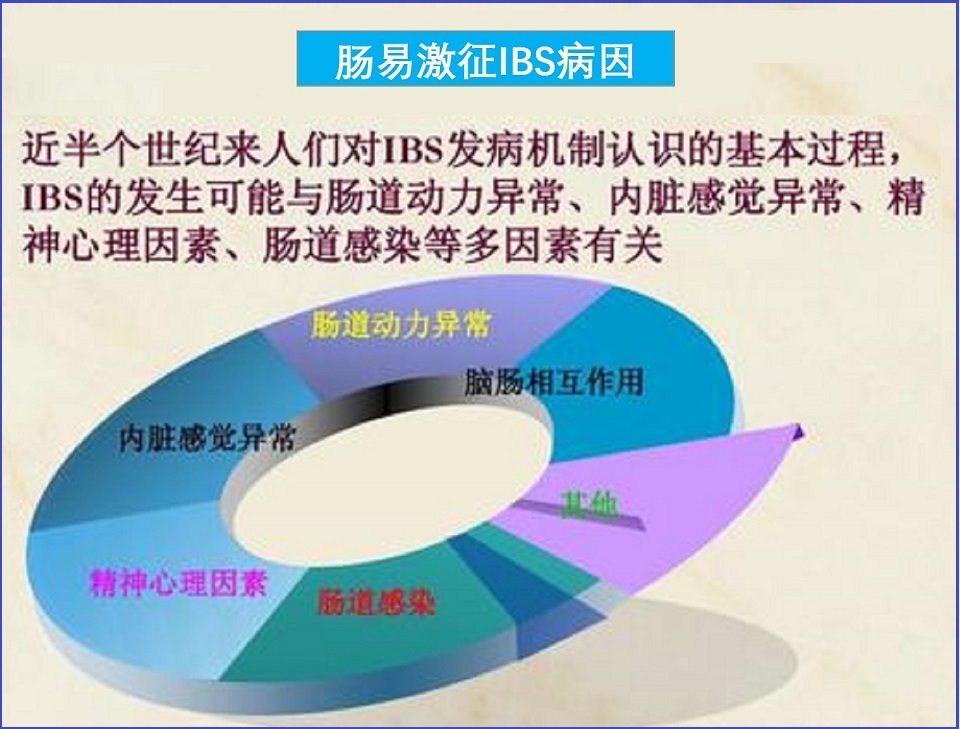
IBS的确切原因尚不清楚。可能与下列因素有关:- 脑-肠轴联系异常,如压力和焦虑等促进肠道超敏反应,引起腹泻、疼痛等。
- 结肠肌肉收缩不正常,在食物通过消化道持续时间收缩更长,导致气体、腹胀和腹泻。肠道收缩不足会减慢食物通道并导致大便坚硬、干燥。
- 胃肠道区域内改变的血清素代谢和/或疼痛感知途径的异常,引起对腹痛的超敏反应。
- 肠内发炎,一些IBS患者的肠内免疫系统细胞数量增加。这种免疫系统反应与疼痛和腹泻有关。
- 严重感染,IBS可以在由细菌或病毒引起的严重腹泻(胃肠炎)后产生。
- 小肠细菌过度生长,IBS也可能与肠内细菌过多有关。
- 肠道菌落失衡,IBS患者与健康人的微生物可能群落不同。
- 食物:许多IBS患者在食用某些食品或饮料包括小麦、奶制品、柑橘类水果、豆类、卷心菜和碳酸饮料等,可能会触发或出现更严重的IBS症状。
- 压力:大多数IBS患者在压力增加期间经历更严重或更频繁的体征和症状。
- 激素波动:女性患IBS的可能性更高,许多女性在经期或经期之间发现体征和症状恶化,这表明荷尔蒙的变化起了一定的作用。
风险因素
IBS在女性中更为常见,在50岁以下群体中较易发生。下列因素会增加患肠易激综合征的机会:
- 家庭成员患IBS
- 压力
- 紧张、焦虑症
症状
IBS症状有时候发生或不发生,范围从轻微到严重,常见包括:- 腹部痉挛、绞痛
- 胀气、腹胀
- 便溏、腹泻
- 便秘
- 肠道运动时疼痛
- 腹泻与便秘交替出现
- 便急后又想大便
- 大便带粘液
- 压力
- 月经
- 大餐或多脂肪食物
- 胃肠中多余气体
并发症
IBS有关的慢性便秘或腹泻可导致痔疮。此外,IBS与以下相关联:
- 生活质量差:许多中度至重度IBS患者可明显影响日常生活和工作。
- 情绪障碍:IBS患者可导致抑郁或焦虑。反之,抑郁和焦虑也使IBS恶化。
疗法
肠易激综合征没有治愈方法,治疗重在控制症状、恢复肠道功能。选项可包括如下:
调整饮食与生活方式
调整饮食可以帮助控制症状:
- 详细记录日常所食物及不良反应情况,告知医生可能的食物过敏状况
- 逐渐改变饮食结构,并记录结果
- 避免对自己引起不利的食物
- 避免可能引起IBS症状的食物和饮料,如:
- 高脂肪食物,辛辣食物
- 乳制品
- 洋葱、卷心菜和其他产气食物
- 大量的咖啡因或酒精
- 可以减少痉挛发生的食物,如:
- 水果和蔬菜
- 全谷食物和富含纤维食物 (注意:太多纤维可增加胀气和腹胀)
- 少吃多餐、或不吃过饱
- 慢慢吃,尽量不要吞咽空气
- 多喝水,有助于减少便秘
- 经常运动锻炼,可以帮助改善肠道功能和其他IBS症状。
营养与草本综合干预
以下是基于循证医学和循证营养学有关文献综合的结果。
有助于防控肠易激征的营养和草本补充剂,主要包括如下:
1.益生菌:
益生菌是一种微生物,当以足够的水平给药时,可以为宿主提供健康益处1。益生菌作为一个整体,当持续服用时,可以帮助重新平衡肠道菌群,缓解IBS症状,并在2018年美国胃肠病学会(ACG)指南中被推荐用于治疗整体IBS症状以及治疗腹胀和胀气2。然而,2021年ACG指南得出结论,尽管益生菌是IBS治疗的重要研究领域,目前还没有足够的证据推荐它们用于全球性IBS症状3。某些益生菌菌株和益生菌混合物已在IBS患者中进行了临床研究,并显示出积极的效果。
与健康个体相比,便秘型IBS(IBS-C)4和腹泻型IBS(IBS-D)5患者的胃肠道(GI)中发现了一种特别重要的细菌,即双歧杆菌6。长双歧杆菌BB536已在临床上进行了充分的研究,并在各种环境中得到了证明,包括抗生素的使用,以改善腹泻和便秘的排便模式。它还被证明有助于消除机会性胃肠道病原体,并对免疫功能产生有益作用7。另一种被证明可以改善肠道症状的特异性双歧杆菌菌株是乳双歧杆菌HN019,尤其是在便秘患者中。一项随机对照试验发现,乳双歧杆菌HN019以每天100亿CFU的剂量治疗28天,增加了一组功能性便秘患者的排便频率,减少了紧张,这些患者在基线下每周排便三次或更少8。在另一项针对有功能性胃肠道症状的个体的临床试验中,与安慰剂相比,乳双歧杆菌HN019每天服用14天也显示出减少转运时间和缓解症状,更高的日剂量172亿CFU被证明比18亿CFU更有效9。评估乳双歧杆菌HN019与不同乳酸杆菌菌株联合使用的其他研究表明,在短短两周内对与便秘相关的胃肠道症状有积极影响10,11。
双歧杆菌属下的菌株婴儿双歧杆菌35624™也被多项临床研究证实其可改善腹胀、腹痛等胃肠不适或消化不良症,以及缓解IBS相关的便秘或腹泻症状12,13,降低肠道炎症水平14,15。
在乳酸杆菌中研究最多并被证实可缓解IBS症状的是植物乳杆菌LP299v,IBS患者在四周内每天服用200亿CFU,肠胃胀气迅速缓解;在停止补充后很长一段时间内,胃肠道整体功能仍有改善16。
凝结芽孢杆菌的孢子形成细菌对包括高温和胃酸在内的恶劣环境极为耐受17,在多项临床研究中也被证明可以改善IBS症状18-20。具体而言,凝结芽孢杆菌MTCC 5856,每天补充20亿CFU、持续90天,被证明可以显著改善腹胀、呕吐、腹泻,与安慰剂相比,IBS-D患者的腹痛和排便频率也有所改善,也改善了疾病的严重程度和生活质量20。一项类似设计的研究对IBS和抑郁症患者补充凝结芽孢杆菌MTCC 5856、连续 90天进行了测试,发现与安慰剂相比抑郁症和IBS症状有所改善21。
布拉氏酵母菌是一种经过充分研究的益生菌酵母,在几项研究中显示,它可以改善与抗生素使用、旅行者腹泻和复发性艰难梭菌感染有关的腹泻22,23。尽管布拉氏酵母作为单一疗法,改善特异性IBS症状的临床数据并不特别有力,多项研究表明,用这种益生菌酵母治疗对改善IBS相关的生活质量是有效的24,25。此外,在IBS-D患者中,与安慰剂相比,布拉氏酵母已被证明可降低血液和上直肠中的促炎细胞因子白细胞介素(IL)-8和肿瘤坏死因子α(TNF-α),并增加抗炎细胞因子IL-10的水平。在IBD等其他情况下的研究表明,布拉氏酵母菌可能通过改善肠道屏障完整性在解决胃肠道疾病中发挥作用,这也是与IBS有关的一个因素。它还被证明可以通过增加免疫球蛋白A的肠道分泌来帮助解决感染性腹泻,这有助于防止感染26。
2.维生素D:
一些证据表明,维生素D补充剂可能对一些IBS患者有益,尤其是维生素D缺乏症患者。在一项对88名符合罗马IV IBS-D标准且维生素D缺乏或不足的人进行随机分组的研究中,受试者每周接受1250mcg(50,000IU)维生素D3或安慰剂治疗,为期9周。所有参与者还接受了135mg的抗痉挛药物美贝韦林(Colofac),每天两次。在74名完成研究的受试者中,与安慰剂组和基线相比,维生素D组的IBS症状严重程度和炎症介质IL-6水平显著降低27。另一项随机对照试验发现,与安慰剂相比,每两周1250mcg(50,000 IU)的维生素D3改善了一些与炎症和氧化应激相关的生物标志物。对某些炎症生物标志物(TNF-α和IL-17)的影响仅在IBS-D受试者中明显,但无论IBS亚型如何,其他炎症标志物和与氧化应激相关的炎症标志物的变化都是明显的28。在一项为期六个月的随机对照试验中,90名IBS受试者每两周服用1250mcg(50,000 IU)维生素D或安慰剂。维生素D组的报告称,与服用安慰剂的受试对象相比,症状有所改善29。
一项纳入112名患有IBS和维生素D水平低的青少年的试验发现,与安慰剂相比,每天补充50mcg(2000IU)维生素D六个月可改善症状30。另一方面,一项试验中,135名患有IBS和维生素D水平低的参与者在12周内每天服用75mcg(3000IU)维生素D或安慰剂,结果发现,尽管血清维生素D水平显著升高,但在研究结束时症状严重程度没有差异31。
尽管并非所有研究都发现维生素D有益处,但考虑到维生素D的最低成本和良好的安全记录,补充维生素D对IBS患者来说是合理的。补充维生素D可能对维生素D水平低的患者特别有用32。
3.褪黑素:
褪黑激素是一种多功能激素,在胃肠道疾病中表现出多种有益作用,而不依赖于其对睡眠的更广为人知的作用33。动物研究表明,肠道内分泌细胞在胃肠道中产生的褪黑激素远远超过松果体产生的褪黑激素34,35。肠道中的褪黑素受体已被证明在运动、炎症和疼痛中发挥作用33。在一项动物研究中,褪黑素也被证明可以影响肠道微生物群的组成,减少压力和睡眠不足引起的微生态失调36。
在一项针对IBS和睡眠障碍患者的研究中,睡前服用3mg褪黑素两周可显著降低腹痛和直肠敏感性37。另一项双盲、安慰剂对照、交叉研究支持了这些发现,补充3mg褪黑素可减轻IBS症状38。在绝经后妇女中,每天补充褪黑素,剂量为早上3mg,晚上5mg,持续六个月,在4个月和6个月时,与安慰剂相比,便秘为主的患者(IBS-C)的总体症状得到显著改善39。在一项小型研究中,除了改善肠功能外,还检查了更广泛的症状,褪黑激素与整体生活质量改善43%相关,而安慰剂组为14%。服用褪黑素的患者的总体IBS评分提高了45%,而服用安慰剂的患者为16%40。
4.谷氨酰胺:
谷氨酰胺是体内最丰富的氨基酸,也是肠道上皮细胞的重要燃料。谷氨酰胺由于内源性合成而被认为是一种非必需氨基酸;然而,在高代谢状态下(如严重烧伤、感染和手术;可能还有怀孕、哺乳和大量生长期),它通常被认为是“有条件的必需”41,42。在这种身体高压力时期,小肠粘膜消耗谷氨酰胺的速率超过了生产速率43。因此,谷氨酰胺已被证明可以改善肠道通透性44,45。
谷氨酰胺已被证明在肠道修复很重要的环境中具有临床益处,如克罗恩病和感染后腹泻46,47。在肠道感染后患有IBS-D的个体中,一项随机对照试验发现,谷氨酰胺剂量为5g,每天三次,持续八周,几乎80%的人的IBS严重程度评分得到了显著改善,而安慰剂组只有5.8%的人达到了类似的改善。谷氨酰胺组的患者在日常排便频率、布里斯托尔大便量表评分和肠道通透性方面也有非常显著的改善。谷氨酰胺组的肠道通透性正常,但对照组没有46。
运动,特别是在高强度或高温下,已被证明可以增加肠道通透性47。事实上,25-50%的精英运动员有胃肠道症状48。极端温度和水合作用不足会进一步导致胃肠道功能失调47。对运动员的临床研究表明,谷氨酰胺有助于减少甚至防止与剧烈运动相关的肠道通透性增加50,51。
5.镁:
镁是一种渗透性泻药,用于治疗便秘已有很长的历史52。在患有轻度至中度慢性便秘的女性中,每天三次服用500mg氧化镁,持续28天,显著改善了自发排便(SBM)的频率、结肠转运时间,与安慰剂相比,Bristol大便稠度评分总体症状和便秘相关的生活质量也显著改善53。在患有慢性便秘的成年人中,与安慰剂(近12%)相比,每天1500mg氧化镁或1000mg番泻叶(一种刺激性泻药)治疗28天,总体症状显著改善(分别为68%和69%)54。与安慰剂相比,积极治疗组的SBM和完全SBM也有显著改善。
因为高剂量的镁可能会引起轻微的腹部不适,所以最好在白天逐渐增加和/或分开剂量。在健康人中,肾脏每天过滤2000–2400mg镁55,并且在通常用于泻药的剂量下使用镁的风险很小。然而,过量使用镁,特别是那些患有晚期慢性肾脏疾病的人,会导致高镁血症56。那些服用额外泻药并每天使用超过1000mg镁的人患这种并发症的风险更大。
6.肌肽锌:
肌肽锌是锌的一种形式,多项研究表明它有助于肠道内壁的健康,提高紧密连接的完整性并保护肠道绒毛免受损伤57,58。肠通透性增加已被证明是IBS-D患者的一个问题,并与内脏超敏有关59,60。锌肌肽也具有一些抗炎和抗氧化作用,这可能有助于其在IBS中的作用61。
在一项针对健康志愿者的交叉研究中,每天两次37.5mg的锌肌肽被证明可以改善非甾体抗炎药使用引起的肠道通透性增加58。在一项随机、对照、交叉试验中,在相同剂量下,锌肌肽显着降低了剧烈运动引起的肠道渗透率增加。研究结束时效果最大,治疗14天后渗透率下降71%62。
7.胶原蛋白:
胶原蛋白通常被认为具有肠道愈合作用:市场上的许多“肠道愈合”饮食和胶原蛋白增强产品都暗示了这种作用。但是,截至2021年年中,还缺乏针对胶原蛋白的人体研究。然而,细胞和动物研究的临床前研究表明,胶原蛋白肽可能支持肠道完整性,并减少与肠道通透性增加有关的炎症。
具体而言,在遭受烧伤的小鼠中,在损伤后7天,已知这种设置会增加肠道通透性,在降低血清内毒素水平(肠道通透性的标志物)和炎症标志物TNF-α和IL-6方面,胶原蛋白肽治疗的效果比谷氨酰胺更大63。对同一动物模型的其他研究发现,当损伤后早期补充胶原蛋白肽时,烧伤诱导的肠道通透性降低,紧密连接破坏64。研究结果Caco-2细胞单层(研究肠道通透性的常见模型)的细胞研究也表明,胶原蛋白肽可以降低炎症触发因子TNF-α诱导的肠道通透性65,66。
8.消化酶:
根据2012年的一项全面调查,IBS患者使用消化酶补充剂的情况很普遍67。综合酶补充剂通常包括用于分解乳糖的乳糖酶、用于分解植物物质的酶如木聚糖酶、纤维素酶和半纤维素酶、促进醇溶蛋白分解的特异酶、支持蛋白质消化的蛋白酶,脂肪酶可以改善脂肪的消化,α-半乳糖苷酶可以帮助分解豆类等食物中的低聚糖。补充特定的消化酶(如乳糖酶)是治疗乳糖不耐受相关消化症状的公认干预措施。
补充酶摄入也被用作外分泌性胰腺功能不全(EPI)相关症状的干预措施,外分泌性胰功能不全可能具有类似于IBS的症状,特别是在其轻度状态下68。由于EPI通常在胰脂肪酶降至正常胰腺输出的10%以下时被诊断,在达到诊断阈值之前,许多人可能会出现与胰腺输出不足有关的症状69。一些疾病与EPI有关—在约40%的长期糖尿病患者中发现胰腺弹性蛋白酶产生减少(<200mcg/g),而乳糜泻和饮酒是其他潜在的影响因素70-72。综合性的粪便检测,包括对消化健康指标(如弹性蛋白酶水平)的评估和对未消化脂肪的评估,可以帮助确定轻度EPI是否是导致IBS用餐症状的因素。
由于可能存在轻度EPI、未确诊的食物不耐受或敏感,或对高FODMAP食物的敏感性,使用消化酶作为膳食补充剂可能改善与用餐相关的IBS症状73,74。
9.朝鲜蓟:
朝鲜蓟叶自古罗马时代起就被用作支持消化功能的传统药物。研究表明,它可以促进胆汁的产生,帮助消化膳食脂肪,减少痉挛和胀气。一项随机对照试验显示,与安慰剂相比,朝鲜蓟提取物在给药后120-150分钟可显著增加胆汁分泌量75。动物研究也支持这种植物的传统用途76,77。
在一项研究中,每天三次服用两粒320mg朝鲜蓟叶提取物胶囊,几乎完全消除了腹痛、痉挛、腹胀、胀气78。进一步的分析表明,朝鲜蓟叶提取物显著改善了功能性消化不良(即无明显原因的复发性消化不良)受试者的生活质量79。另一项研究发现,在两个月内每天摄入320或640mg朝鲜蓟叶萃取物显著减轻IBS症状,提高生活质量80。
10.姜根:生姜通常用于缓解恶心和呕吐81,还可以通过刺激迁移运动复合体的活动来改善便秘,迁移运动复合体是促进肠道运动(蠕动)和排便的神经和平滑肌复合体。迁移运动复合物活性的缺乏可能导致SIBO(小肠菌过度生长)的失调状态,这是一些人IBS的一个因素82。研究表明,用200mg生姜治疗可以增加迁移运动复合物的活性,以应对试验餐83。生姜的活性成分生姜酚(Gingerols)和姜烯酚(Shogaol)也具有抗炎特性84。
朝鲜蓟和生姜组合:两项临床研究着眼于朝鲜蓟和生姜标准提取物的特定组合对消化健康的影响。在一项多中心、随机、双盲、安慰剂对照试验中,功能性消化不良患者每天在午餐和晚餐前服用两次该组合(含有100mg朝鲜蓟和20mg生姜提取物)85。治疗14天后,接受该配方的试验组症状显著改善,而安慰剂组没有变化。研究结束时(第28天),添加朝鲜蓟/生姜的组恶心、腹胀、上腹部饱胀和疼痛有显著改善。在一项旨在观察急性补充朝鲜蓟/生姜组合对胃容量影响的试点、随机、交叉研究中,受试者餐后胃面积小24%,餐前服用一粒胶囊,随后对一小群参与者进行了评估,发现在餐前摄入两粒补充剂后,与安慰剂相比,餐后胃面积减少了38%86。
11.薄荷油:
薄荷油是一种天然的解痉药。美国胃肠病学会(ACG)指南2018推荐薄荷油用于治疗IBS的总体症状,在他们对七项随机临床试验的分析中显示,它比安慰剂显著更有效,需要治疗的数量(NNT)为487。NNT是为了实现研究结果的一次出现而需要接受干预的人数(在本例中是IBS症状的改善)。在一项研究中,每天两次服用225mg薄荷油的肠道包衣制剂,四分之三的患者的所有IBS症状都减轻了50%以上,而安慰剂组只有38%的患者症状得到了改善88。
在一项精心设计的研究中,187mg类似的薄荷油产品在八周内每天饭前三次服用,与安慰剂相比,在腹部不适、腹痛和生活质量方面有显著改善,但在腹泻、便秘或腹胀方面没有改善89。在另一项研究中,薄荷油治疗IBS患者的益处包括减轻腹痛,减少腹胀和胀气,减少胃咆哮,减少大便频率,改善大便一致性90。一项对12项随机试验(包括835名受试者)的荟萃分析得出结论,与安慰剂相比,薄荷油改善了整体IBS症状和腹痛,报告的不良反应没有差异91。
薄荷油和香菜籽油(Caraway seeds)也被一起研究过。在一项针对45名非溃疡性消化不良患者(其中约一半患有肠易激综合征)的双盲安慰剂对照临床研究中,治疗组的受试者服用了一种肠溶胶囊,其中含有薄荷和香菜籽油的组合,每天三次,持续四周。虽然所有患者在治疗前都抱怨中度至重度疼痛,但治疗组42%的患者在接受联合治疗两周后没有疼痛,而安慰剂组只有一名患者。治疗四周后,治疗组63%的患者没有疼痛,安慰剂组为25%,治疗组89%的患者疼痛强度有所改善,安慰剂组则为45%92。同样的研究人员后来进行的一项试验也发现了类似的结果,在29天的治疗后,67%的功能性消化不良患者的薄荷/香菜油混合物得到了很大或非常大的改善,而服用安慰剂的患者只有21%93。薄荷油的一个可能的副作用是胃灼热,因为它可能对食道肌肉有松弛作用87。
12.黄连素:
黄连素是一种黄橙色生物碱,存在于白毛茛、伏牛等植物中,通过多种机制可能对IBS有用。黄连素具有充分证明的抗菌作用,并支持肠上皮紧密连接的完整性94-97。在动物中,它也被证明具有抗伤害感受作用,降低内脏过敏反应98。
在人类研究中,黄连素已被证明对治疗各种病因的腹泻有效。在IBS-D患者中,与安慰剂相比,每天两次400mg盐酸黄连素治疗八周,显著降低了腹泻、腹痛和排便迫切需要的频率。与安慰剂相比,IBS症状、生活质量以及抑郁和焦虑的评分也有所改善99。一项对包括黄连素、瓜尔胶和褪黑素在内的组合的回顾性研究也发现,治疗与功能性腹泻或IBS-D的显著改善有关。30天后,腹泻事件减少了50-70%,90天后减少了70-80%,超过一半的受试者报告了正常的布里斯托尔大便量表评分100。硫酸盐形式的黄连素也被证明对急性改善肠毒素性大肠杆菌引起的腹泻有效101。
中国(黄连素被广泛用于治疗腹泻的地区)最近的一项系统综述和荟萃分析调查了38项随机对照试验,其中黄连素用于治疗各种来源的腹泻,包括感染性和非感染性原因。通常,黄连素给药的时间很短,与标准疗程的抗生素相似。在选定的研究中,允许进行各种其他干预措施,包括抗生素、益生菌、B族维生素和蒙脱石(一种吸收性粘土)以及黄连素。总体而言,研究发现,与未报告严重不良事件的对照干预措施相比,黄连素改善了临床结果,缩短了腹泻的持续时间102。
尽管已经对黄连素进行了研究,并在人体临床试验中证明其具有高水平的安全性,但在临床前研究的基础上,人们对其长期使用提出了担忧,这些研究表明长期使用黄连素,尤其是高剂量,可能会损害特定类型细胞的细胞代谢103-105。这项临床前研究的意义尚待长期人体临床试验确定,因此黄连素通常仅适于短期使用。
13.紫苏:
紫苏叶富含多酚。紫苏叶既是一种美味的食用香菜,其历来也用于过敏、呼吸和消化疾病106。在一项随机对照试验中,47名患有胃肠道不适和排便频率降低的参与者接受了紫苏提取物的治疗,每天两次,每次150mg,或安慰剂治疗四周。紫苏组的所有胃肠道症状,包括腹部不适、胀气、咕咕声、饱胀和腹胀等都得到了显著改善。对于腹胀,紫苏组的阳性反应率为83%,而安慰剂组为57%107。
紫苏可能有几种作用模式,有助于其对消化系统症状的有益作用。临床前研究表明,紫苏能刺激肠道运动108,并可能缓解肠道肌肉痉挛109。其他研究发现,紫苏提取物普遍抑制炎症反应110,111,尤其是在小鼠的大肠中112。
众所周知,压力、焦虑和抑郁通过连接胃肠道、大脑、免疫系统和微生物群的复杂网络与疼痛敏感性、胃肠动力和肠道通透性的变化有关113。除了预防压力诱导的炎症反应外,紫苏的一种精油提取物可以预防慢性应激小鼠的抑郁相关行为114。另一项研究还注意到,紫苏精油治疗小鼠后,应激诱导的抑郁症状减少,并逆转了应激诱导的大脑代谢变化。在本研究中,紫苏提取物优于氟西汀(百忧解)115。
14.活性炭:
活性炭是一种有用的缓和剂,尤其是对感染后IBS-D。活性炭用于胃肠道增强对有毒物质的清除116,117。由于其吸附性,活性炭也有助于身体消除感染的免疫原性和毒性副产物,例如细菌内毒素检查118,119。活性炭被认为是治疗腹泻的缓和剂,因为与抗腹泻治疗相比,它的副作用率较低120。
一项关于活性炭治疗IBS的多中心研究发现,在治疗12周后,近80%的人对活性炭具有良好的耐受性和有效性,其中约60%的人报告便秘是一种症状。即使是在研究开始时患有严重和中度便秘的患者也有了实质性的改善。据报道,胀气、大便粘稠度和腹胀也得到了改善121。研究表明,活性炭也有助于降低化疗引起腹泻的严重程度和频率122,123。
使用活性炭可能会导致某些人便秘124,125。使用活性炭后,大便也会变黑,这可能会被误认为大便中有血126。重要的是,在服用处方药的同时服用活性炭可能减少身体吸收的药物量。因此,不应同时服用药物和活性炭。如果正在服用任何药物,在使用活性炭之前应咨询医生。
15.姜黄素:
姜黄以其对炎症的影响而著称,并被用于与炎症相关的多种疾病,包括IBS。一项对五项随机对照试验的系统综述和荟萃分析发现,姜黄素对IBS症状没有显著影响;然而,这些研究的异质性相当大,因为它们既包括可变剂量,也包括其他营养素的组合127。值得注意的是,五项研究中有三项独立发现对IBS症状有积极和显著的影响。在该综述中的一项大型非安慰剂对照试验中,连续八周每天服用72或144 mg姜黄提取物可显著降低IBS患病率,改善生活质量128。
众所周知,大多数IBS患者在压力增加或紧张、焦虑期间,可经历更严重或更频繁的体征和症状。因此,通过减轻压力可以使IBS患者受益,相关内容可参阅本文专文:慢性压力管理 >>
更多可点击其个性化的综合干预方案如下:
以及参阅本网如下专文的相关内容:
医疗干预
根据具体的症状,医生可能会推荐如下一种或几种药物组合:
- 解痉剂
- 抗生素
- 高纤维膨胀剂
- 抗气胀剂
- 止泻剂
- 低剂量的抗抑郁药
- 止痛药
- 5-羟色胺受体激动剂和拮抗剂:治疗腹泻及其他IBS的症状,如女性腹痛
- 益生菌
- 薄荷油
其他疗法
咨询医生或专业人士,减少压力的方法,包括如下:
- 心理咨询
- 生物反馈
- 身心放松
自我护理
饮食疗法可能有益,可包括如下:
- 低FODMAPs饮食:指含低聚果糖、乳糖、果糖、山梨糖醇和甘露糖等,因这些纤维难于消化直接进入肠道后,刺激细菌生长,导致肠道菌落失衡。
- 无麸质饮食(Gluten-free)。
- 避免食物过敏。
预防
由于病因不明,还没有预防肠易激征IBS的指南。
参考文献:
2. Ford AC et al. American College of Gastroenterology Monograph on Management of Irritable Bowel Syndrome. The American journal of gastroenterology. Jun 2018;113(Suppl 2):1-18.
3. Lacy BE et al. ACG Clinical Guideline: Management of Irritable Bowel Syndrome. The American journal of gastroenterology. Jan 1 2021;116(1):17-44.
4. Chassard C et al. Functional dysbiosis within the gut microbiota of patients with constipated-irritable bowel syndrome. Alimentary pharmacology & therapeutics. Apr 2012;35(7):828-38.
5. Duboc H et al. Increase in fecal primary bile acids and dysbiosis in patients with diarrhea-predominant irritable bowel syndrome. Neurogastroenterology and motility. Jun 2012;24(6):513-20, e246-7.
6. Balsari A et al. The fecal microbial population in the irritable bowel syndrome. Microbiologica. Jul 1982;5(3):185-94.
7. Wong CB et al. Beneficial effects of Bifidobacterium longum subsp. longum BB536 on human health: Modulation of gut microbiome as the principal action. Journal of functional foods. 2019;54:506-519.
8. Ibarra A et al. Effects of 28-day Bifidobacterium animalis subsp. lactis HN019 supplementation on colonic transit time and gastrointestinal symptoms in adults with functional constipation: A double-blind, randomized, placebo-controlled, and dose-ranging trial. Gut Microbes. 2018;9(3):236-251.
9. Waller PA et al. Dose-response effect of Bifidobacterium lactis HN019 on whole gut transit time and functional gastrointestinal symptoms in adults. Scandinavian journal of gastroenterology. Sep 2011;46(9):1057-64.
10. Airaksinen K et al. The effect of a probiotic blend on gastrointestinal symptoms in constipated patients: a double blind, randomised, placebo controlled 2-week trial. Benef Microbes. Jul 10 2019;10(6):617-627.
11. Magro DO et al. Effect of yogurt containing polydextrose, Lactobacillus acidophilus NCFM and Bifidobacterium lactis HN019: a randomized, double-blind, controlled study in chronic constipation. Nutr J. Jul 24 2014;13:75.
12. O’Mahony L et al. Lactobacillus and Bifidobacterium in irritable bowel syndrome: symptom responses and relationship to cytokine profiles, Gastroenterology, 2005 Mar; 128(3):541-51.
13. Whorwell P et al. Efficacy of an encapsulated probiotic Bifidobacterium infantis 35624 in women with irritable bowel syndrome. Am J Gastroenterol, 2006 Jul;101: 1581-1590.
14. Konieczna P et al. Bifidobacterium infantis 35624 administration induces Foxp3 T Regulatory cells in human peripheral blood: potential role for myeloid and plasmacytoid dendritic cells. Gut. 2012 Mar;61(3):354-66.
15. Groeger D et al.Bifidobacterium infantis 35624 modulates host inflammatory processes beyond the gut’, Gut Microbes. 2013 Jul;4 (4): 325-339.
16. Nobaek S et al. Alteration of intestinal microflora is associated with reduction in abdominal bloating and pain in patients with irritable bowel syndrome. The American journal of gastroenterology. May 2000;95(5):1231-8.
17. Majeed M et al. Comparative evaluation for thermostability and gastrointestinal survival of probiotic Bacillus coagulans MTCC 5856. Bioscience, biotechnology, and biochemistry. Mar 24 2021;85(4):962-971.
18. Gupta AK, Maity C. Efficacy and safety of Bacillus coagulans LBSC in irritable bowel syndrome: A prospective, interventional, randomized, double-blind, placebo-controlled clinical study [CONSORT Compliant]. Medicine. Jan 22 2021;100(3):e23641.
19. Dolin BJ. Effects of a proprietary Bacillus coagulans preparation on symptoms of diarrhea-predominant irritable bowel syndrome. Methods and findings in experimental and clinical pharmacology. Dec 2009;31(10):655-9.
20. Majeed M, Nagabhushanam K, Natarajan S, et al. Bacillus coagulans MTCC 5856 supplementation in the management of diarrhea predominant Irritable Bowel Syndrome: a double blind randomized placebo controlled pilot clinical study. Nutrition Journal. 2015;15(1):1-10.
21. Majeed M et al. Bacillus coagulans MTCC 5856 for the management of major depression with irritable bowel syndrome: a randomised, double-blind, placebo controlled, multi-centre, pilot clinical study. Food Nutr Res. 2018 Jul 4;62.
22. McFarland LV. Systematic review and meta-analysis of Saccharomyces boulardii in adult patients. World J Gastroenterol. May 14 2010;16(18):2202-22.
23. McFarland LV et al. A randomized placebo-controlled trial of Saccharomyces boulardii in combination with standard antibiotics for Clostridium difficile disease. JAMA. Jun 22-29 1994;271(24):1913-8.
24. Abbas Z et al. Cytokine and clinical response to Saccharomyces boulardii therapy in diarrhea-dominant irritable bowel syndrome: a randomized trial. European journal of gastroenterology & hepatology. Jun 2014;26(6):630-9.
25. Choi CH et al. A randomized, double-blind, placebo-controlled multicenter trial of saccharomyces boulardii in irritable bowel syndrome: effect on quality of life. Journal of clinical gastroenterology. Sep 2011;45(8):679-83.
26. Terciolo C et al. Beneficial effects of Saccharomyces boulardii CNCM I-745 on clinical disorders associated with intestinal barrier disruption. Clin Exp Gastroenterol. 2019;12:67-82.
27. Khalighi Sikaroudi M et al. Vitamin D3 Supplementation in Diarrhea-Predominant Irritable Bowel Syndrome Patients: The Effects on Symptoms Improvement, Serum Corticotropin-Releasing Hormone, and Interleukin-6 - A Randomized Clinical Trial. Complement Med Res. 2020;27(5):302-309.
28. Amani R et al. Vitamin D3 Induced Decrease in IL-17 and Malondialdehyde, and Increase in IL-10 and Total Antioxidant Capacity Levels in Patients with Irritable Bowel Syndrome. Iran J Immunol. Sep 2018;15(3):186-196.
29. Abbasnezhad A et al. Effect of vitamin D on gastrointestinal symptoms and health-related quality of life in irritable bowel syndrome patients: a randomized double-blind clinical trial. Neurogastroenterology and motility. Oct 2016;28(10):1533-44.
30. El Amrousy D et al. Vitamin D supplementation in adolescents with irritable bowel syndrome: Is it useful? A randomized controlled trial. Saudi J Gastroenterol. Mar-Apr 2018;24(2):109-114.
31. Williams CE et al. Vitamin D supplementation in people with IBS has no effect on symptom severity and quality of life: results of a randomised controlled trial. Eur J Nutr. 2022 Feb;61(1):299-308.
32. Barbalho SM et al. Irritable bowel syndrome: a review of the general aspects and the potential role of vitamin D. Expert review of gastroenterology & hepatology. Apr 2019;13(4):345-359.
33. Chen CQ et al. Distribution, function and physiological role of melatonin in the lower gut. World J Gastroenterol. Sep 14 2011;17(34):3888-98.
34. Bubenik GA. Thirty four years since the discovery of gastrointestinal melatonin. Journal of physiology and pharmacology : an official journal of the Polish Physiological Society. Aug 2008;59 Suppl 2:33-51.
35. Pal PK et al. Enterochromaffin cells as the source of melatonin: key findings and functional relevance in mammals. Melatonin Research. 2019;2(4):61-82.
36. Park YS et al. Melatonin in the colon modulates intestinal microbiota in response to stress and sleep deprivation. Intestinal research. Jul 2020;18(3):325-336.
37. Song GH et al. Melatonin improves abdominal pain in irritable bowel syndrome patients who have sleep disturbances: a randomised, double blind, placebo controlled study. Gut. Oct 2005;54(10):1402-7.
38. Lu WZ et al. Melatonin improves bowel symptoms in female patients with irritable bowel syndrome: a double-blind placebo-controlled study. Alimentary pharmacology & therapeutics. Nov 15 2005;22(10):927-34.
39. Chojnacki C et al. Influence of melatonin on symptoms of irritable bowel syndrome in postmenopausal women. Endokrynologia Polska. 2013;64(2):114-20.
40. Saha L et al. A preliminary study of melatonin in irritable bowel syndrome. Journal of clinical gastroenterology. Jan 2007;41(1):29-32.
41.Watford M. Glutamine and glutamate: Nonessential or essential amino acids? Anim Nutr. Sep 2015;1(3):119-122.
42.Buchman AL. Glutamine: commercially essential or conditionally essential? A critical appraisal of the human data. Am J Clin Nutr. Jul 2001;74(1):25-32.
43. Rao R et al. Role of Glutamine in Protection of Intestinal Epithelial Tight Junctions. J Epithel Biol Pharmacol. Jan 2012;5(Suppl 1-M7):47-54.
44. Li J et al. Glutamine prevents parenteral nutrition-induced increases in intestinal permeability. JPEN Journal of parenteral and enteral nutrition. Jul-Aug 1994;18(4):303-7.
45. Ding LA et al. Effects of glutamine on intestinal permeability and bacterial translocation in TPN-rats with endotoxemia. World J Gastroenterol. Jun 2003;9(6):1327-32.
46. Zhou Q et al. Randomised placebo-controlled trial of dietary glutamine supplements for postinfectious irritable bowel syndrome. Gut. Jun 2019;68(6):996-1002.
47. Benjamin J et al. Glutamine and whey protein improve intestinal permeability and morphology in patients with Crohn's disease: a randomized controlled trial. Dig Dis Sci. Apr 2012;57(4):1000-12.
48. Pires W et al. Association Between Exercise-Induced Hyperthermia and Intestinal Permeability: A Systematic Review. Sports medicine (Auckland, NZ). Jul 2017;47(7):1389-1403.
49. de Oliveira EP, Burini RC. The impact of physical exercise on the gastrointestinal tract. Current opinion in clinical nutrition and metabolic care. Sep 2009;12(5):533-8.
50. Pugh JN et al. Glutamine supplementation reduces markers of intestinal permeability during running in the heat in a dose-dependent manner. European journal of applied physiology. Dec 2017;117(12):2569-2577.
51. Zuhl M et al. The effects of acute oral glutamine supplementation on exercise-induced gastrointestinal permeability and heat shock protein expression in peripheral blood mononuclear cells. Cell stress & chaperones. Jan 2015;20(1):85-93.
52. Mori H et al. Magnesium Oxide in Constipation. Nutrients. Jan 28 2021;13(2)
53. Mori S et al. A Randomized Double-blind Placebo-controlled Trial on the Effect of Magnesium Oxide in Patients With Chronic Constipation. J Neurogastroenterol Motil. Oct 30 2019;25(4):563-575.
54. Morishita D et al. Senna Versus Magnesium Oxide for the Treatment of Chronic Constipation: A Randomized, Placebo-Controlled Trial. The American journal of gastroenterology. Jan 1 2021;116(1):152-161.
55. Blaine J et al. Renal control of calcium, phosphate, and magnesium homeostasis. Clinical journal of the American Society of Nephrology : CJASN. Jul 7 2015;10(7):1257-72.
56. Mori H et al. Clinical features of hypermagnesemia in patients with functional constipation taking daily magnesium oxide. Journal of clinical biochemistry and nutrition. Jul 2019;65(1):76-81.
57. Watari I et al. Effectiveness of polaprezinc for low-dose aspirin-induced small-bowel mucosal injuries as evaluated by capsule endoscopy: a pilot randomized controlled study. BMC gastroenterology. 2013;13:108.
58. Mahmood A et al. Zinc carnosine, a health food supplement that stabilises small bowel integrity and stimulates gut repair processes. Gut. Feb 2007;56(2):168-75.
59. Mujagic Z et al. Small intestinal permeability is increased in diarrhoea predominant IBS, while alterations in gastroduodenal permeability in all IBS subtypes are largely attributable to confounders. Alimentary pharmacology & therapeutics. Aug 2014;40(3):288-97.
60. Zhou Q et al. Intestinal membrane permeability and hypersensitivity in the irritable bowel syndrome. Pain. Nov 2009;146(1-2):41-6.
61. Choi HS et al. The effect of polaprezinc on gastric mucosal protection in rats with ethanol-induced gastric mucosal damage: comparison study with rebamipide. Life Sci. Jul 30 2013;93(2-3):69-77.
62. Davison G et al. Zinc carnosine works with bovine colostrum in truncating heavy exercise-induced increase in gut permeability in healthy volunteers. Am J Clin Nutr. Aug 2016;104(2):526-36.
63. Chen Q et al. Effects of early enteral nutrition supplemented with collagen peptides on post-burn inflammatory responses in a mouse model. Food Funct. May 24 2017;8(5):1933-1941.
64. Chen Q et al. Collagen peptides administration in early enteral nutrition intervention attenuates burn-induced intestinal barrier disruption: Effects on tight junction structure. Journal of Functional Foods. 2019;55:167-174.
65. Song W et al. Identification and Structure-Activity Relationship of Intestinal Epithelial Barrier Function Protective Collagen Peptides from Alaska Pollock Skin. Mar Drugs. Jul 31 2019;17(8)
66. Chen Q et al. Collagen peptides ameliorate intestinal epithelial barrier dysfunction in immunostimulatory Caco-2 cell monolayers via enhancing tight junctions. Food Funct. Mar 22 2017;8(3):1144-1151.
67. Nguyen L. Complementary and Alternative Medicine for the Management of Irritable Bowel Syndrome. Gastroenterol Hepatol (N Y). Sep 2018;14(9):536-538.
68. Capurso G et al. Exocrine pancreatic insufficiency: prevalence, diagnosis, and management. Clin Exp Gastroenterol. 2019;12:129-139.
69. Struyvenberg MR et al. Practical guide to exocrine pancreatic insufficiency - Breaking the myths. BMC Med. Feb 10 2017;15(1):29.
70. Hardt PD et al. High prevalence of exocrine pancreatic insufficiency in diabetes mellitus. A multicenter study screening fecal elastase 1 concentrations in 1,021 diabetic patients. Pancreatology. 2003;3(5):395-402.
71. Leeds JS et al. Is exocrine pancreatic insufficiency in adult coeliac disease a cause of persisting symptoms? Alimentary pharmacology & therapeutics. Feb 1 2007;25(3):265-71.
72. Pezzilli R et al. Alcohol-related chronic exocrine pancreatic insufficiency: diagnosis and therapeutic management. A proposal for treatment by the Italian Association for the Study of the Pancreas (AISP) and the Italian Society of Alcohology (SIA). Minerva Med. Oct 2019;110(5):425-438.
73. Ianiro G et al. Digestive Enzyme Supplementation in Gastrointestinal Diseases. Curr Drug Metab. 2016;17(2):187-93.
74. Ido H et al. Combination of Gluten-Digesting Enzymes Improved Symptoms of Non-Celiac Gluten Sensitivity: A Randomized Single-blind, Placebo-controlled Crossover Study. Clin Transl Gastroenterol. Sep 19 2018;9(9):181.
75. Kirchhoff R et al. Increase in choleresis by means of artichoke extract. Phytomedicine. Sep 1994;1(2):107-15.
76. Saenz Rodriguez T et al. Choleretic activity and biliary elimination of lipids and bile acids induced by an artichoke leaf extract in rats. Phytomedicine. Dec 2002;9(8):687-93.
77. Wegener T et al. Pharmacological properties and therapeutic profile of artichoke (Cynara scolymus L.). Wien Med Wochenschr. 1999;149(8-10):241-7.
78. Walker AF et al. Artichoke leaf extract reduces symptoms of irritable bowel syndrome in a post-marketing surveillance study. Phytother Res. Feb 2001;15(1):58-61.
79. Holtmann G et al. Functional dyspepsia and irritable bowel syndrome—Treatment effects of artichoke-leaf-extract: A placebo-controlled, randomised, multicenter trial. Gastroenterology. 04/01 2003;124
80. Bundy R et al. Artichoke leaf extract reduces symptoms of irritable bowel syndrome and improves quality of life in otherwise healthy volunteers suffering from concomitant dyspepsia: a subset analysis. Journal of alternative and complementary medicine (New York, NY). Aug 2004;10(4):667-9.
81. Ernst E et al. Efficacy of ginger for nausea and vomiting: a systematic review of randomized clinical trials. British journal of anaesthesia. Mar 2000;84(3):367-71.
82. Deloose E et al. The migrating motor complex: control mechanisms and its role in health and disease. Nat Rev Gastroenterol Hepatol. Mar 27 2012;9(5):271-85.
83. Micklefield GH et al. Effects of ginger on gastroduodenal motility. International journal of clinical pharmacology and therapeutics. Jul 1999;37(7):341-6.
84. Dugasani S et al. Comparative antioxidant and anti-inflammatory effects of [6]-gingerol, [8]-gingerol, [10]-gingerol and [6]-shogaol. Journal of ethnopharmacology. Feb 3 2010;127(2):515-20.
85. Giacosa A et al. The Effect of Ginger (Zingiber officinalis) and Artichoke (Cynara cardunculus) Extract Supplementation on Functional Dyspepsia: A Randomised, Double-Blind, and Placebo-Controlled Clinical Trial. Evid Based Complement Alternat Med. 2015;2015:915087.
86. Lazzini S et al. The effect of ginger (Zingiber officinalis) and artichoke (Cynara cardunculus) extract supplementation on gastric motility: a pilot randomized study in healthy volunteers. European review for medical and pharmacological sciences. 2016;20(1):146-9.
87. Ford AC et al. American College of Gastroenterology Monograph on Management of Irritable Bowel Syndrome. The American journal of gastroenterology. Jun 2018;113(Suppl 2):1-18.
88. Cappello G et al. Peppermint oil (Mintoil) in the treatment of irritable bowel syndrome: a prospective double blind placebo-controlled randomized trial. Dig Liver Dis. Jun 2007;39(6):530-6.
89. Merat S et al. The effect of enteric-coated, delayed-release peppermint oil on irritable bowel syndrome. Dig Dis Sci. May 2010;55(5):1385-90.
90. Liu JH et al. Enteric-coated peppermint-oil capsules in the treatment of irritable bowel syndrome: a prospective, randomized trial. Journal of gastroenterology. Dec 1997;32(6):765-8.
91. Alammar N et al. The impact of peppermint oil on the irritable bowel syndrome: a meta-analysis of the pooled clinical data. BMC complementary and alternative medicine. 2019;19(1):21-21.
92. May B et al. Efficacy of a fixed peppermint oil/caraway oil combination in non-ulcer dyspepsia. Arzneimittel-Forschung. Dec 1996;46(12):1149-53.
93. May B et al. Efficacy and tolerability of a fixed combination of peppermint oil and caraway oil in patients suffering from functional dyspepsia. Alimentary pharmacology & therapeutics. 2000;14(12):1671-1677.
94. Cernakova M et al. Antimicrobial activity of berberine--a constituent of Mahonia aquifolium. Folia microbiologica. 2002;47(4):375-8.
95. Slobodnikova L et al. Antimicrobial activity of Mahonia aquifolium crude extract and its major isolated alkaloids. Phytother Res. Aug 2004;18(8):674-6.
96. Gu L et al. Berberine ameliorates intestinal epithelial tight-junction damage and down-regulates myosin light chain kinase pathways in a mouse model of endotoxinemia. J Infect Dis. Jun 1 2011;203(11):1602-12.
97. Li N et al. Berberine attenuates pro-inflammatory cytokine-induced tight junction disruption in an in vitro model of intestinal epithelial cells. European journal of pharmaceutical sciences. Apr 16 2010;40(1):1-8.
98. Tang QL et al. Antinociceptive effect of berberine on visceral hypersensitivity in rats. World J Gastroenterol. Jul 28 2013;19(28):4582-9.
99. Chen C et al. A Randomized Clinical Trial of Berberine Hydrochloride in Patients with Diarrhea-Predominant Irritable Bowel Syndrome. Phytother Res. Nov 2015;29(11):1822-7.
100. Di Pierro F et al. Role of a berberine-based nutritional supplement in reducing diarrhea in subjects with functional gastrointestinal disorders. Minerva gastroenterologica e dietologica. Mar 2020;66(1):29-34.
101. Rabbani GH et al. Randomized controlled trial of berberine sulfate therapy for diarrhea due to enterotoxigenic Escherichia coli and Vibrio cholerae. J Infect Dis. May 1987;155(5):979-84.
102. Yu M et al. Berberine for diarrhea in children and adults: a systematic review and meta-analysis. Therapeutic advances in gastroenterology. 2020;13:1756284820961299.
103. Kysenius K et al. Mitochondria and NMDA receptor-dependent toxicity of berberine sensitizes neurons to glutamate and rotenone injury. PLoS One. 2014;9(9):e107129.
104. Mikes V et al. Interaction of fluorescent berberine alkyl derivatives with respiratory chain of rat liver mitochondria. J Bioenerg Biomembr. Feb 1985;17(1):23-32.
105. Mikes V et al. Berberine derivatives as cationic fluorescent probes for the investigation of the energized state of mitochondria. Biochim Biophys Acta. May 27 1983;723(2):231-9.
106. Asif M. Phytochemical study of polyphenols in Perilla Frutescens as an antioxidant. Avicenna journal of phytomedicine. Fall 2012;2(4):169-178.
107. Buchwald-Werner S et al. Perilla extract improves gastrointestinal discomfort in a randomized placebo controlled double blind human pilot study. BMC Complement Altern Med. May 27 2014;14:173.
108. Koezuka Y et al. An Intestinal Propulsion Promoting Substance from Perilla frutescens and Its Mechanism of Action. Planta Med. Dec 1985;51(6):480-2.
109. Verspohl EJ et al. Testing of Perilla frutescens extract and Vicenin 2 for their antispasmodic effect. Phytomedicine. Mar 15 2013;20(5):427-31.
110. Chen CY et al. Anti-inflammatory effects of Perilla frutescens in activated human neutrophils through two independent pathways: Src family kinases and Calcium. Sci Rep. Dec 14 2015;5:18204.
111. Lee H-A et al. Anti-inflammatory Effect of Perilla frutescens (L.) Britton var. frutescens Extract in LPS-stimulated RAW 264.7 Macrophages. Preventive nutrition and food science. 2012;17(2):109-115.
112. Urushima H et al. Perilla frutescens extract ameliorates DSS-induced colitis by suppressing proinflammatory cytokines and inducing anti-inflammatory cytokines. American journal of physiology Gastrointestinal and liver physiology. Jan 1 2015;308(1):G32-41.
113. Moloney RD et al. Stress and the Microbiota-Gut-Brain Axis in Visceral Pain: Relevance to Irritable Bowel Syndrome. CNS neuroscience & therapeutics. Feb 2016;22(2):102-17.
114. Ji WW et al. Antidepressant-like effect of essential oil of Perilla frutescens in a chronic, unpredictable, mild stress-induced depression model mice. Chinese journal of natural medicines. Oct 2014;12(10):753-9.
115. Yi LT et al. Essential oil of Perilla frutescens-induced change in hippocampal expression of brain-derived neurotrophic factor in chronic unpredictable mild stress in mice. Journal of ethnopharmacology. May 2 2013;147(1):245-53.
116. Isbister GK et al. Indications for single-dose activated charcoal administration in acute overdose. Current opinion in critical care. Aug 2011;17(4):351-7.
117. Jurgens G et al. The effect of activated charcoal on drug exposure in healthy volunteers: a meta-analysis. Clin Pharmacol Ther. May 2009;85(5):501-5.
118. Pegues AS et al. The removal of 14C labeled endotoxin by activated charcoal. Int J Artif Organs. May 1979;2(3):153-8.
119. Kodama M et al. Blood purification for critical care medicine: endotoxin adsorption. Ther Apher. Aug 1997;1(3):224-7.
120. Senderovich H et al. Is there a role for charcoal in palliative diarrhea management? Current medical research and opinion. Jul 2018;34(7):1253-1259.
121. Kurti F et al. Treatment of irritable bowel syndrome symptoms and the role of compounded charcoal-A multicentre study. Albanian Med J. 2014;4:66-72.
122. Sergio GC et al. Activated charcoal to prevent irinotecan-induced diarrhea in children. Pediatr Blood Cancer. Jul 2008;51(1):49-52.
123. Michael M et al. Phase II study of activated charcoal to prevent irinotecan-induced diarrhea. J Clin Oncol. Nov 1 2004;22(21):4410-7.
124. Farrell KS et al. Gastrointestinal obstruction secondary to activated charcoal granule impaction in a dog. J Vet Emerg Crit Care (San Antonio). Jul 2020;30(4):461-466.
125. Chyka PA et al. Position paper: Single-dose activated charcoal. Clinical toxicology (Philadelphia, Pa). 2005;43(2):61-87.
126. Sato RL et al. Adverse effects of superactivated charcoal administered to healthy volunteers. Hawaii Med J. Nov 2002;61(11):251-3.
127. Ng QX et al. A Meta-Analysis of the Clinical Use of Curcumin for Irritable Bowel Syndrome (IBS). J Clin Med. Sep 22 2018;7(10)
128. Bundy R et al. Turmeric extract may improve irritable bowel syndrome symptomology in otherwise healthy adults: a pilot study. Journal of alternative and complementary medicine (New York, NY). Dec 2004;10(6):1015-8.
参考来源:
美国梅奥诊所
www.mayoclinic.org
美国胃肠病协会
http://www.gastro.org
美国胃肠病学会
http://patients.gi.org
加拿大胃肠病协会
https://www.cag-acg.org
加拿大卫生部
http://www.hc-sc.gc.ca
免责声明和安全信息
- 本信息(包括任何附带资料)不是为了取代医生或有关合格从业人士的建议或忠告。
- 任何人如果想要对本文涉及的药物、饮食、运动或其他生活方式的使用、或改变调整,以预防或治疗某一特定健康状况或疾病,应首先咨询医生或有关合格从业人士,并获得他/她们的许可。妊娠和哺乳妇女在使用本网站任何内容前,尤其应征求医生的意见。
- 除非另有说明,本网站所述内容仅适用于成人。
- 本网站所推荐的任何产品,消费者应该以实际的产品标签内容为准,尤其应关注重要的安全信息以及产品最新信息,包括剂量、使用方法和禁忌症等。
- 由于循证医学研究、文献及有关产品处于不断的变化中,本网站工作人员将尽力更新。
- 本网站不能保证所载文章内容、综合干预方案以及相关成分或产品述及的健康益处,也不承担任何责任。